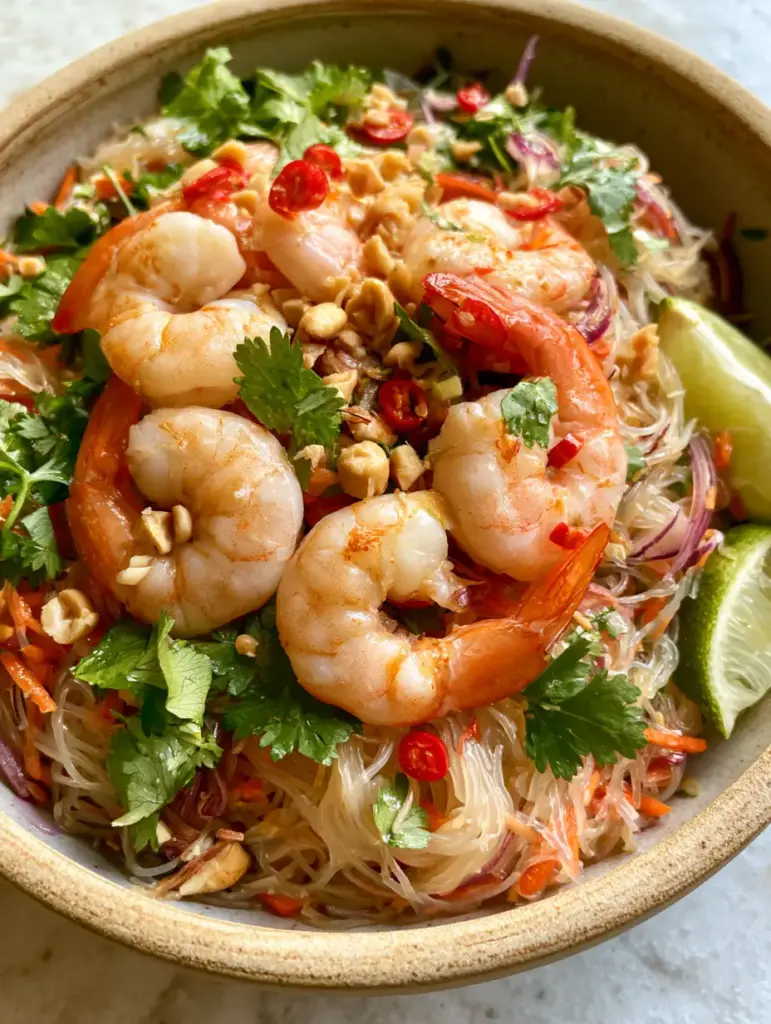
There is a specific kind of magic that happens when soft, indirect morning sunlight hits a bowl of Thai Shrimp Noodle Salad. The way the light catches the translucent, glossy mung bean noodles and reflects off the moisture of a perfectly poached shrimp is enough to make any home cook stop and stare. This isn’t just a meal; it is a masterclass in the balance of the four pillars of Thai flavor: salty, sour, sweet, and spicy.
When you prepare this Thai Shrimp Noodle Salad, you are looking for a very specific visual and textural harmony. The noodles should be slippery and glass-like, tangled with vibrant orange julienned carrots and paper-thin slices of purple shallots. Every bite should offer the crunch of roasted peanuts and the sharp, clean heat of red bird’s eye chilies. It is a refreshing, high-protein dish that feels sophisticated yet remains incredibly approachable for a weeknight dinner.
This recipe is designed to replicate the vibrant, handheld aesthetic of a professional culinary shoot. We are focusing on the tactile quality of the ingredients, from the jagged edges of fresh cilantro leaves to the zesty, thin dressing that coats every surface. If you are looking for more non-lettuce salad recipes to add to your repertoire, this glass noodle classic is the ultimate starting point.
The Sensory Appeal of This Vibrant Glass Noodle Salad
- Visual Translucency: The mung bean noodles provide a stunning, clear base that allows the colors of the vegetables to pop.
- Textural Contrast: You get the snap of poached shrimp, the crunch of roasted peanuts, and the tender-crisp julienned carrots in every forkful.
- Aromatic Depth: The combination of fresh cilantro and shaved purple shallots creates a fragrant profile that is instantly recognizable.
- Perfectly Balanced Heat: Using red bird’s eye chilies ensures a clean, sharp spice that cuts through the savory fish sauce.
- Glossy Finish: A zesty lime-juice and fish sauce dressing ensures the dish looks as delicious as it tastes, catching the light beautifully.
The Essential Aromatics for Thai Shrimp Noodle Salad
To achieve the forensic visual accuracy required for this dish, we must start with the highest quality glass noodles. Also known as cellophane noodles or mung bean threads, these are dry, white, and brittle in the package but transform into clear, slippery strands once hydrated. You will need approximately 3.5oz (100g) of dry noodles to serve two hungry adults or four as a side.
The protein is the star of the show. We are using six large, plump shrimp (16/20 count) per serving to ensure a high-impact presentation. Look for shrimp with the orange tails still attached, as this adds a professional, rustic aesthetic to the final bowl. You will also need a foundational pinch of sea salt for the poaching liquid to ensure the shrimp are seasoned from the inside out.
For the produce, precision is key. You will need 1 large (100g) carrot, julienned into matchsticks that match the thickness of the noodles. Two small (50g) purple shallots should be shaved into paper-thin rounds, providing a mild, sweet onion flavor without the harshness of white onions. A handful of fresh cilantro sprigs and 2 tbsp (30g) of crushed roasted peanuts provide the final layers of texture.
The dressing requires 3 tbsp (45ml) of fresh lime juice, which acts as the acidic backbone. Combine this with 2 tbsp (30ml) of high-quality fish sauce and 1 tsp (5g) of palm sugar or light brown sugar. This creates that “glossy chili-lime dressing” mentioned in our blueprint. Don’t forget the heat—3 to 4 red bird’s eye chilies, thinly sliced, will provide the necessary kick.
Essential Tools for Culinary Precision
Achieving the perfect julienne on your carrots requires a sharp chef’s knife or a mandoline slicer. If you want the noodles to have that professional “tangled” look, a pair of kitchen shears is essential for trimming them after they have been soaked. This prevents them from being too long and difficult to eat.
A stainless steel mixing bowl is preferred for tossing the salad, as it allows you to aggressively coat the noodles in the dressing without the flavors lingering in the material. You will also need a small pot for poaching the shrimp and a fine-mesh strainer to drain the noodles immediately to prevent them from becoming mushy.
Step-by-Step Guide to the Perfect Thai Shrimp Noodle Salad
Mastering the Chili-Lime Dressing
In a small glass jar or bowl, whisk together the lime juice, fish sauce, and sugar until the sugar is completely dissolved. Add the thinly sliced red bird’s eye chilies and let them steep in the liquid for at least 10 minutes. This allows the capsaicin to infuse the dressing, creating a uniform heat throughout the Thai Shrimp Noodle Salad.
Poaching the Shrimp for Maximum Plumpness
Bring a small pot of water to a gentle simmer—do not let it reach a rolling boil. Add a pinch of salt and drop in the six large shrimp. Poach them for exactly 2-3 minutes until the flesh is opaque and the tails turn a vibrant, bright orange. Immediately transfer them to an ice bath to stop the cooking process; this ensures they remain plump and moist rather than rubbery.
Hydrating the Translucent Glass Noodles
Place the dry mung bean noodles in a heat-proof bowl and cover them with boiling water. Let them sit for 5-7 minutes until they are completely translucent and soft to the bite. Drain them thoroughly in a colander and rinse with cold water to remove excess starch. This is the secret to getting that glossy, non-sticky texture that catches the morning sunlight.
The Art of the Assembly
In your large mixing bowl, combine the hydrated noodles, julienned carrots, and shaved purple shallots. Pour the chili-lime dressing over the mixture and toss vigorously using tongs. You want the noodles to be fully saturated so they appear glossy and catch the light. Just before serving, fold in the fresh cilantro leaves to keep them from wilting.
Expert Tips for Culinary Success
- Dry the Noodles: After draining the noodles, pat them slightly with a paper towel. If they are too wet, the dressing will be diluted and won’t cling to the strands.
- Shallot Prep: If you find raw shallots too pungent, soak the shaved rounds in ice water for 5 minutes before adding them to the salad. This mellows the flavor while keeping the crunch.
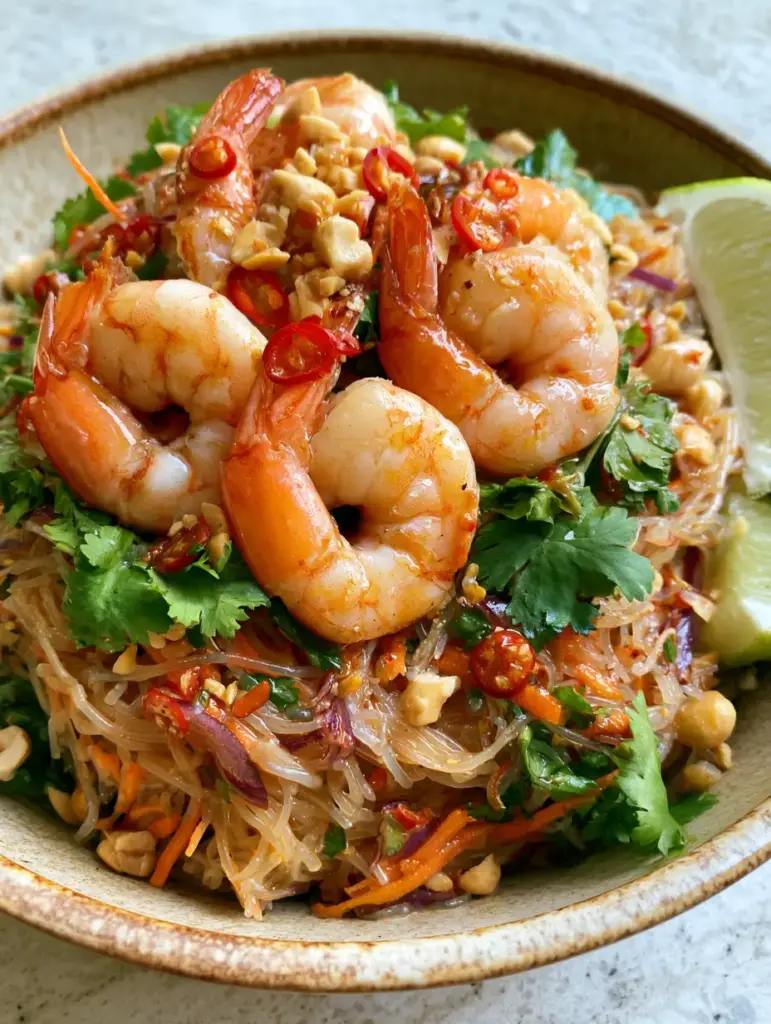
- Shrimp Texture: Always peel and devein the shrimp but leave the tails on. The tail acts as a “handle” for the diner and adds significant visual appeal to the rustic ceramic bowl.
- Peanut Freshness: Toast your peanuts in a dry pan for 2 minutes before crushing them. The released oils will enhance the aroma of the entire Thai Shrimp Noodle Salad.
Storage and Meal Prep Advice
Thai Shrimp Noodle Salad is best enjoyed fresh, as the noodles will eventually absorb all the dressing and lose their glossy translucency. If you must store it, keep the dressing separate and toss just before serving. The poached shrimp will stay fresh in an airtight container for up to 2 days.
We do not recommend freezing this dish. The cellular structure of the mung bean noodles and the fresh carrots will break down upon thawing, resulting in a mushy texture. For the best experience, prep your aromatics in advance and assemble the salad right when you are ready to eat.
What to Serve with Your Thai Glass Noodle Salad
This salad is a complete meal on its own, but it also pairs beautifully with other vibrant dishes. For a full spread, consider serving it alongside a chilled ramen noodle salad for a variety of textures. If you are hosting a summer gathering, this dish complements refreshing summer cocktails like a crisp gin and tonic or a raspberry colada.
For those looking for a more Mediterranean fusion, a Greek couscous salad provides a nice contrast in flavor profiles. Regardless of what you choose, the bright acidity of the lime dressing makes it a versatile partner for many grilled proteins and light appetizers.
Frequently Asked Questions
Yes, red bird’s eye chilies are quite potent. For less heat, you can remove the seeds before slicing or substitute with a milder Fresno chili.
While you can prep the ingredients in advance, it is best to toss the salad just before serving. The noodles tend to absorb the dressing and may lose their glossy texture if left for too long.
The secret is to gently poach them in simmering water for only 2-3 minutes until they turn orange, then immediately shock them in an ice bath to stop the cooking process.
Fish sauce provides the essential salty, umami depth characteristic of Thai cuisine. If you need a substitute, a combination of light soy sauce and a pinch of salt can work, though the flavor profile will change.
This salad uses glass noodles, also known as cellophane noodles or mung bean threads. They are made from mung bean starch and become completely translucent and slippery when hydrated.
The Ultimate Thai Shrimp Noodle Salad Recipe
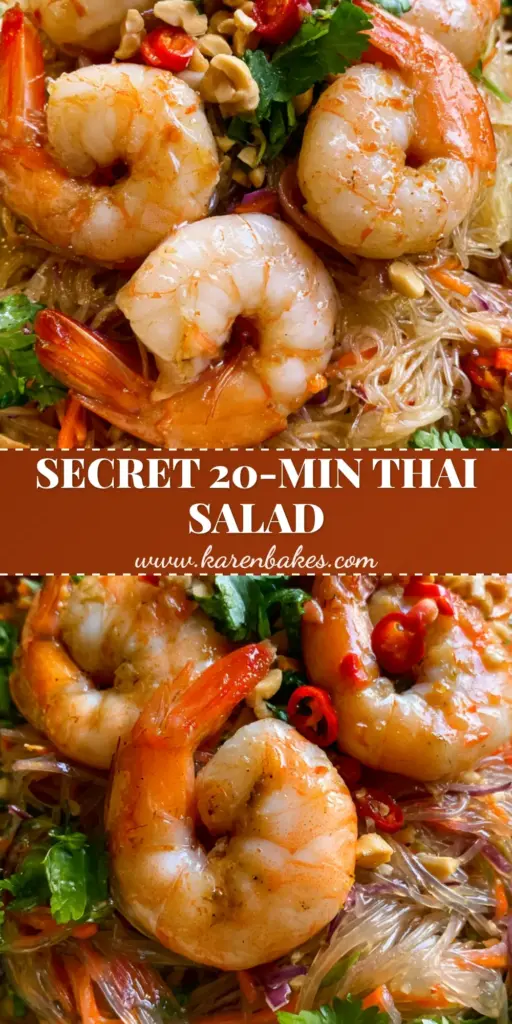
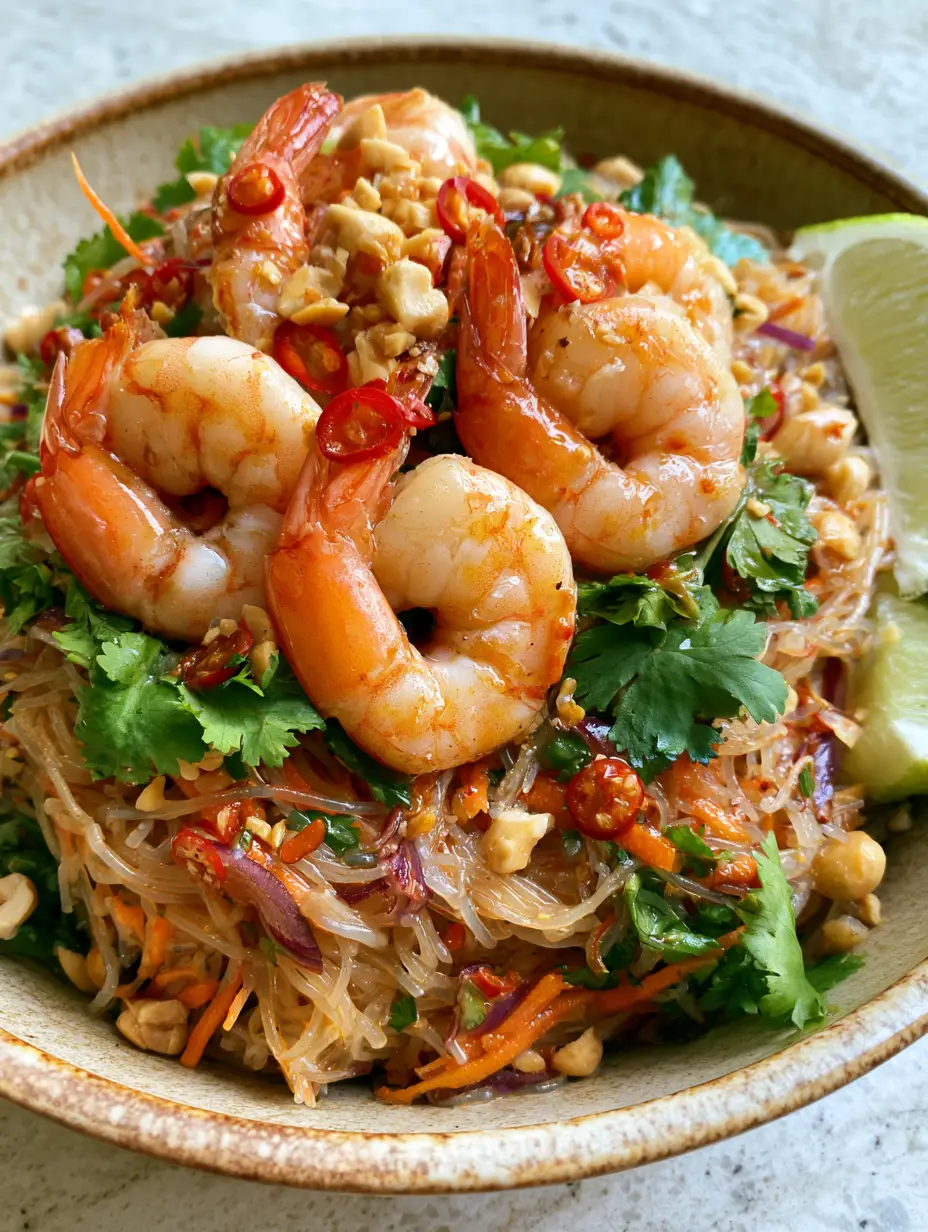
Thai Shrimp Noodle Salad with Zesty Lime and Bird's Eye Chilies
Ingredients
Equipment
Method
- Whisk lime juice, fish sauce, sugar, and sliced chilies in a small bowl until sugar dissolves. Set aside to infuse.
- Bring a pot of salted water to a simmer. Add shrimp and cook for 2-3 minutes until opaque with bright orange tails. Transfer to an ice bath immediately.
- Cover glass noodles with boiling water for 5-7 minutes until translucent. Drain, rinse with cold water, and trim with shears if necessary.
- In a large bowl, combine noodles, carrots, and shallots. Pour the dressing over and toss until noodles are glossy and well-coated.
- Fold in cilantro sprigs. Top with crushed peanuts and serve in rustic bowls with lime wedges on the side.
Notes
For a milder salad, remove the seeds from the bird's eye chilies.
Closing & Call to Action
This Thai Shrimp Noodle Salad is a celebration of fresh ingredients and precise technique. Whether you are serving it in a rustic ceramic bowl for a quiet lunch or as part of a larger dinner party, its vibrant colors and bold flavors are guaranteed to impress. The combination of plump poached shrimp and zesty dressing creates a culinary experience that is both light and deeply satisfying.
If you enjoyed this recipe, please leave a comment below and let us know how your noodles turned out! Don’t forget to follow us on Pinterest and save this recipe to your favorite boards for later. Happy cooking!