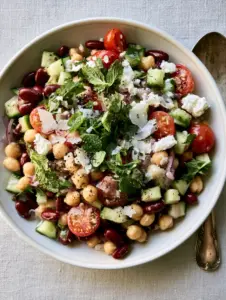
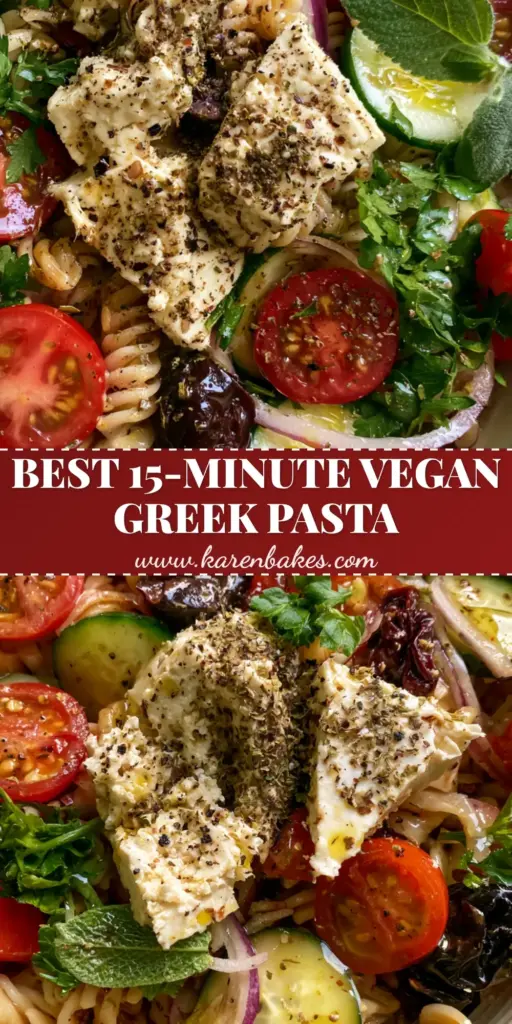
The Vegan Greek Pasta Salad is the ultimate celebration of Mediterranean flavors, combining the heartiness of al dente gluten-free rotini with the crisp, cooling crunch of fresh summer vegetables. Imagine a bowl where every deep ridge of the pasta is coated in a glossy, sun-drenched vinaigrette that sparkles under the kitchen lights.
This isn’t just another side dish; it is a vibrant, textural masterpiece designed to be the centerpiece of your next gathering. From the translucent slivers of red onion to the jagged, creamy white chunks of plant-based feta, every bite offers a forensic balance of acid, salt, and herbaceous freshness.
Whether you are meal-prepping for a busy week or looking for a vibrant salad recipe to impress your friends, this dish delivers professional-grade results with home-cook simplicity. Let’s dive into the science of building the perfect cold pasta salad.
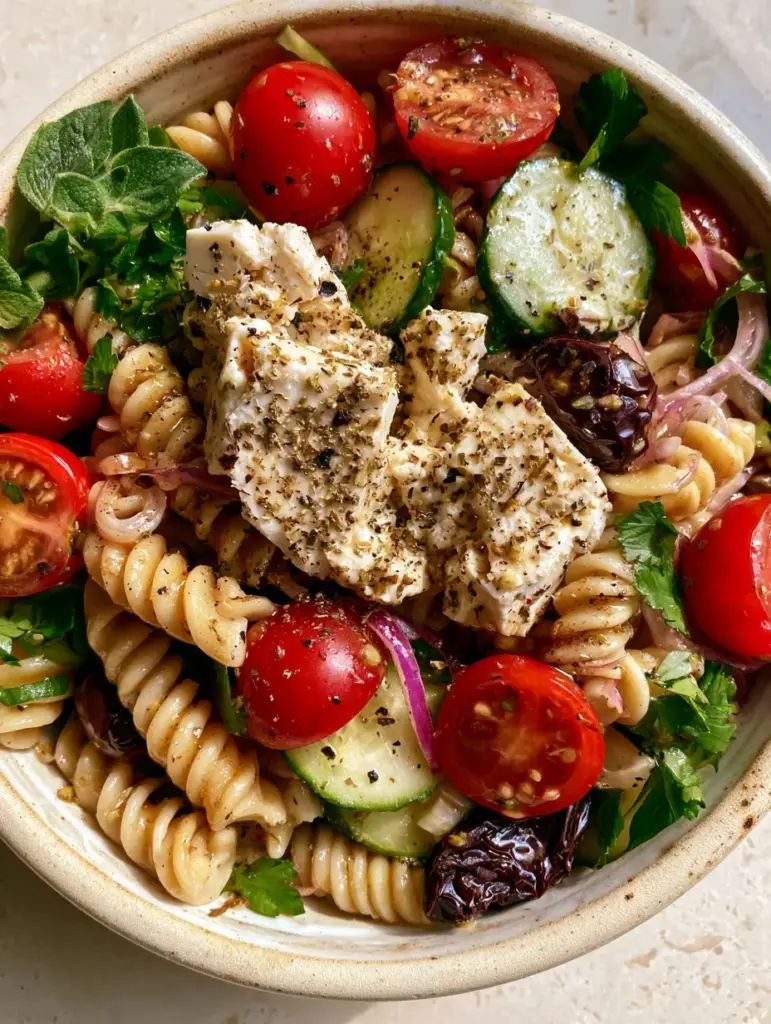
Why This Plant-Based Mediterranean Salad Works
- Textural Contrast: The combination of soft, ridged pasta and crisp cucumber half-moons creates a satisfying mouthfeel in every forkful.
- Glossy Emulsification: Our lemon-herb vinaigrette is engineered to cling to the gluten-free rotini, ensuring no dry bites and a beautiful visual sheen.
- Bold Umami: Wrinkled black kalamata olives and cracked black pepper provide deep, savory notes that balance the bright acidity of the lemon.
- Visually Stunning: With bright red cherry tomatoes and fresh flat-leaf parsley, this dish looks like it was plucked straight from a professional food styling set.
The Anatomy of a Perfect Vegan Greek Pasta Salad
To achieve the specific visual and flavor profile described in our blueprint, we must select high-quality ingredients that hold their integrity when tossed together. Each component plays a specific role in the dish’s structural and aesthetic success.
Gluten-Free Rotini Pasta: Use a high-quality brown rice or corn-based rotini; the deep ridges are essential for “catching” the dressing and herbs. 16 oz (454g) of dried pasta provides the perfect volume for a family-sized serving.
Vegan Feta Cheese: Look for a block-style vegan feta (often coconut oil or almond-based) that you can break into large, jagged chunks. 7 oz (200g) of feta provides the creamy, salty centerpiece that mimics traditional Greek dairy.
Fresh Produce: You will need 2 cups (300g) of halved cherry tomatoes and 1 large English cucumber, sliced into half-moons with the skin on for color. These provide the “juicy” and “crisp” elements that define a classic creamy Greek pasta profile.
The Aromatics: One small red onion (approx. 100g) should be sliced into paper-thin, translucent slivers to provide a mild bite without overpowering the other flavors. 1/2 cup (75g) of whole, pitted kalamata olives adds that iconic wrinkled texture and salty punch.
The Herbaceous Finish: A generous handful (approx. 30g) of fresh flat-leaf parsley and 1 tbsp (2g) of dried oregano are non-negotiable for that authentic Mediterranean aroma. A few whole oregano leaves added at the end provide a sophisticated visual garnish.
Essential Tools for Culinary Success
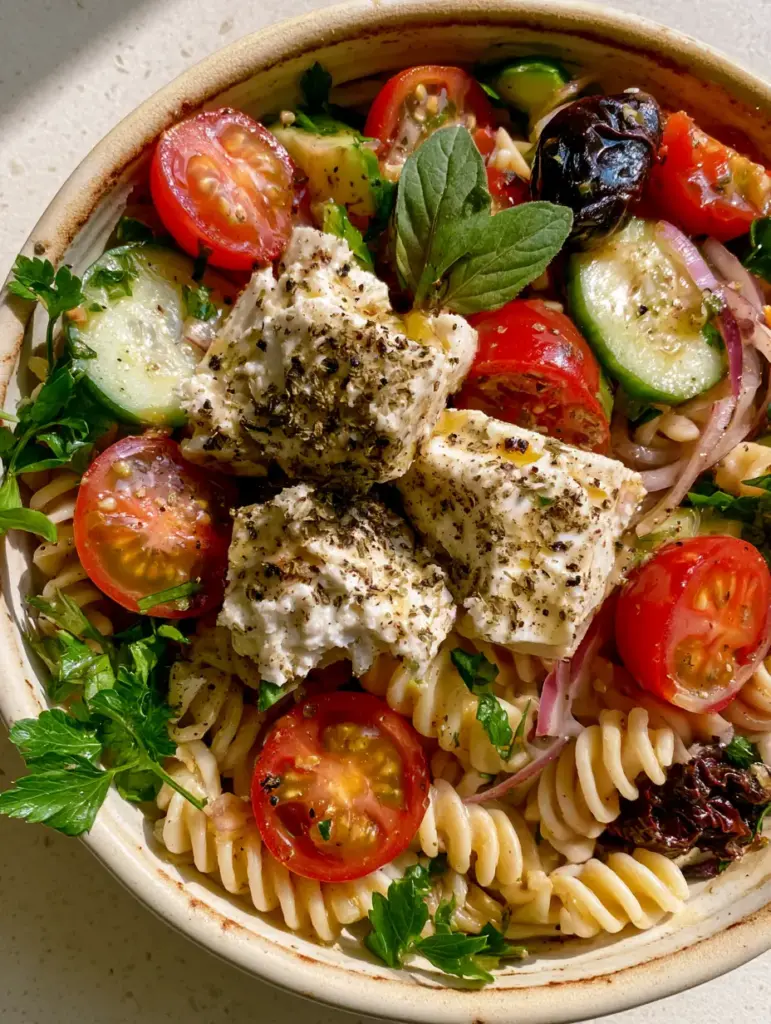
To replicate the macro-shot quality of this dish, you need the right tools to handle the delicate ingredients. A large, rustic ceramic bowl is preferred for serving to allow the colors to pop against a neutral background.
A sharp mandoline or a professional chef’s knife is required to achieve those translucent red onion slivers. You will also need a high-quality whisk to emulsify the dressing into a glossy, cohesive sauce that won’t separate on the vegetables.
The Science of the Glossy Lemon-Herb Vinaigrette
The secret to the “droplets of dressing” seen in professional food photography is a perfectly emulsified vinaigrette. We start with 1/2 cup (120ml) of extra virgin olive oil and 1/4 cup (60ml) of fresh lemon juice.
Adding 1 tsp (5g) of Dijon mustard acts as a natural emulsifier, binding the oil and acid together so the dressing stays glossy and thick. Season this base with 1 tsp (5g) of sea salt and plenty of cracked black pepper to enhance the floral notes of the lemon.
Step-by-Step Instructions for the Perfect Toss
1. Precision Pasta Cooking
Bring a large pot of heavily salted water to a rolling boil. Add 16 oz (454g) of gluten-free rotini and cook for exactly 1 minute less than the package directions for “al dente.”
Drain the pasta and immediately rinse it under cold running water to stop the cooking process and remove excess starch. This ensures the ridges remain distinct and the pasta doesn’t become a gummy mass in the bowl.
2. Preparing the Vibrant Vegetable Base
While the pasta cools, halve your cherry tomatoes and slice the cucumber into 1/4-inch (6mm) half-moons, keeping the dark green skin on for visual contrast. Slice the red onion into slivers so thin they are almost see-through.
Place these into your large ceramic bowl along with the whole kalamata olives. The variety of shapes—round tomatoes, crescent cucumbers, and wrinkled olives—is what creates that “packed” visual appeal.
3. Emulsifying the Herb Vinaigrette
In a small glass jar or bowl, whisk together the olive oil, lemon juice, Dijon mustard, and 1 tsp (2g) of dried oregano. Whisk vigorously until the liquid transforms from translucent to an opaque, glossy gold.
Taste the dressing; it should be sharp and punchy. Remember that the pasta and vegetables will absorb some of this intensity, so a bold starting flavor is essential.
4. The Final Assembly and Styling
Pour the glossy vinaigrette over the cooled pasta and vegetables, tossing gently with silicone tongs to avoid breaking the rotini ridges. You want to see the dressing catching in the grooves of the pasta.
Top the salad with large, jagged chunks of the vegan feta. Do not over-mix once the feta is added; you want the chunks to remain distinct and creamy white, rather than being coated in the red juice of the tomatoes.
5. Sensory Garnishing
Dust the feta chunks heavily with the remaining dried oregano and a generous amount of cracked black pepper. Sprinkle the freshly chopped flat-leaf parsley over the top, and add a few whole oregano leaves for a professional touch.
Look for the visual cues: the highlights on the sauce from the natural light and the visible droplets of dressing on the smooth tomato skins. This is when your Vegan Greek Pasta Salad is ready for its close-up.
Expert Tips for a Professional Finish
- The Rinse Rule: Always rinse gluten-free pasta for cold salads. It removes the surface starch that causes the pasta to stick together as it cools.
- Onion Mellowing: If you find raw red onion too sharp, soak the slivers in ice water for 10 minutes, then pat dry before adding to the salad.
- Temperature Control: Serve the salad at a cool room temperature rather than ice-cold. This allows the flavors of the olive oil and herbs to be more perceptible on the palate.
- Feta Logic: Add the vegan feta last. Plant-based cheeses are often softer than dairy versions; adding them at the very end preserves their “jagged” aesthetic.
Make-Ahead, Storage, and Freshness
The Vegan Greek Pasta Salad is an excellent candidate for meal prep. Store it in an airtight container in the refrigerator for up to 4 days. If you find the pasta has absorbed too much dressing by day two, simply toss it with an extra drizzle of olive oil and a squeeze of lemon to restore the gloss.
Avoid freezing this recipe. The high water content in the cucumbers and tomatoes will cause them to become mushy and lose their structural integrity upon thawing. This dish is best enjoyed fresh or chilled from the fridge.
What to Pair with Your Mediterranean Feast
This salad is incredibly versatile and pairs beautifully with other plant-based delights. If you want to expand your menu, consider serving it alongside a Caprese pasta salad for a dual-themed Italian-Greek luncheon.
For a high-protein option, this salad complements grilled tofu skewers or a creamy chicken salad (using vegan mayo) for a diverse picnic spread. It also sits perfectly next to a classic Italian pasta salad if you are hosting a large “pasta salad bar” event.
Frequently Asked Questions
Yes! It actually tastes better as the flavors meld. However, wait to add the fresh parsley and extra feta chunks until just before serving to keep them looking bright and fresh.
The key is to cook it for 1 minute less than the package instructions and rinse it immediately under cold water. This removes the starch and stops the cooking process, ensuring the rotini stays al dente.
Absolutely! It is packed with fresh vegetables, heart-healthy fats from olive oil, and is completely plant-based and gluten-free, making it suitable for a wide range of dietary needs.
Look for block-style vegan fetas made with coconut oil or almonds, such as Violife or Follow Your Heart. These hold their shape better and provide the ‘jagged’ visual appeal required for a classic Greek look.
Separation usually happens if the dressing wasn’t fully emulsified. Ensure you use Dijon mustard as a binder and whisk vigorously until the oil and lemon juice become a single, thick, glossy sauce.
The Ultimate Vegan Greek Pasta Salad Recipe
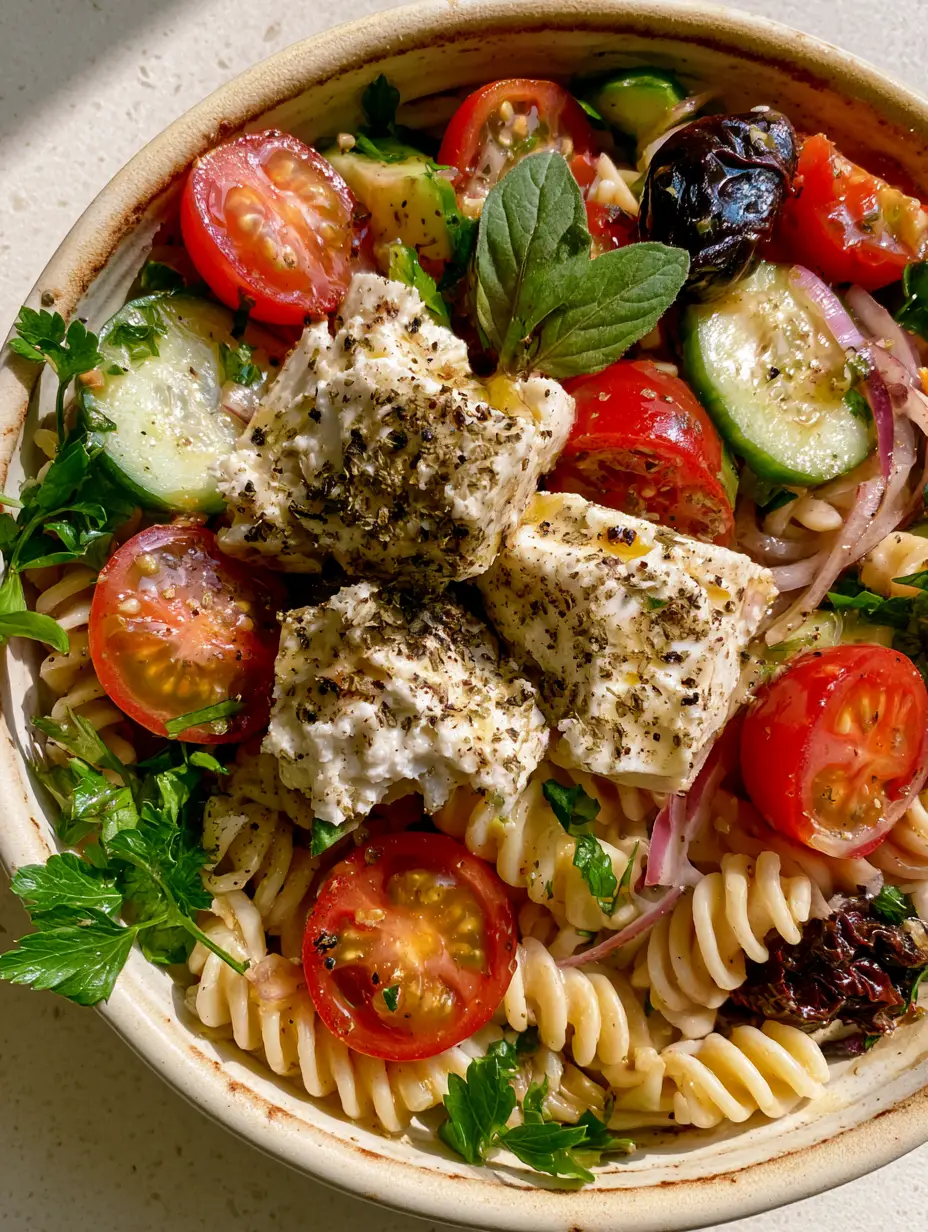
Vegan Greek Pasta Salad with Zesty Lemon Herb Vinaigrette
Ingredients
Equipment
Method
- Boil the rotini in salted water until al dente. Drain and rinse immediately with cold water to stop cooking and remove starch.
- Halve the cherry tomatoes, slice the cucumber into half-moons, and create paper-thin slivers of red onion.
- Whisk the olive oil, lemon juice, mustard, and half the oregano until glossy and fully emulsified.
- Combine pasta and vegetables in a bowl. Pour the dressing over and toss to coat every ridge of the pasta.
- Top with large chunks of vegan feta, remaining oregano, black pepper, and fresh parsley. Garnish with whole oregano leaves.
Notes
Add the vegan feta last to keep the chunks from breaking down.
Closing & Call to Action
This Vegan Greek Pasta Salad proves that plant-based eating can be just as indulgent and visually stunning as any traditional dish. With its glossy vinaigrette, creamy feta chunks, and crisp vegetables, it’s a recipe that satisfies every craving for fresh Mediterranean flavor.
If you enjoyed this recipe, please leave a comment below and let us know how it turned out! Don’t forget to save this to your favorite boards on Pinterest so you can find it whenever the craving for a fresh, vibrant salad strikes.