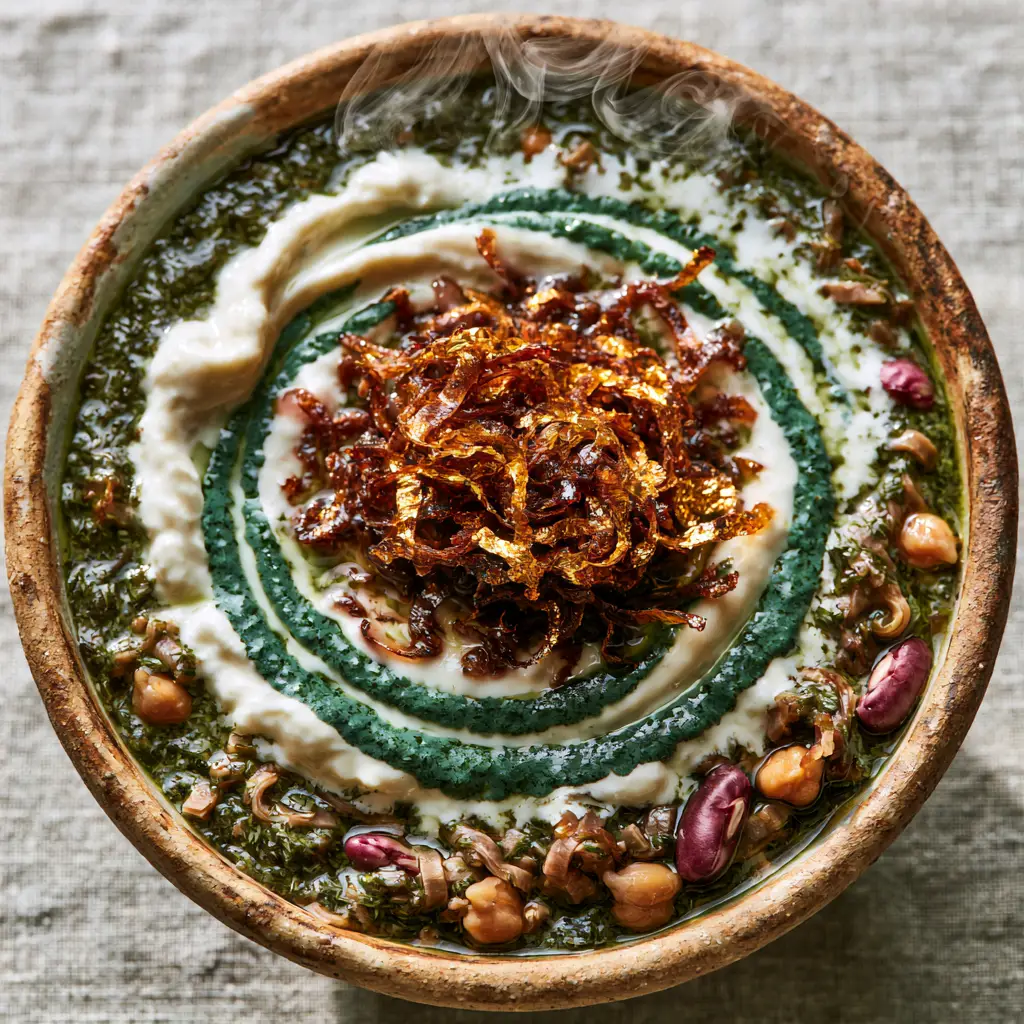
This authentic Persian Soup Recipe, known traditionally as Ash Reshteh, is a vibrant celebration of fresh herbs, hearty legumes, and thick wheat noodles. If you have been searching for a soul-warming dish that features a thick green herb broth and a striking creamy white kashk swirl, you have found the ultimate guide. This soup isn’t just a meal; it is a masterpiece of Persian culinary tradition that combines texture and flavor in every steaming spoonful.
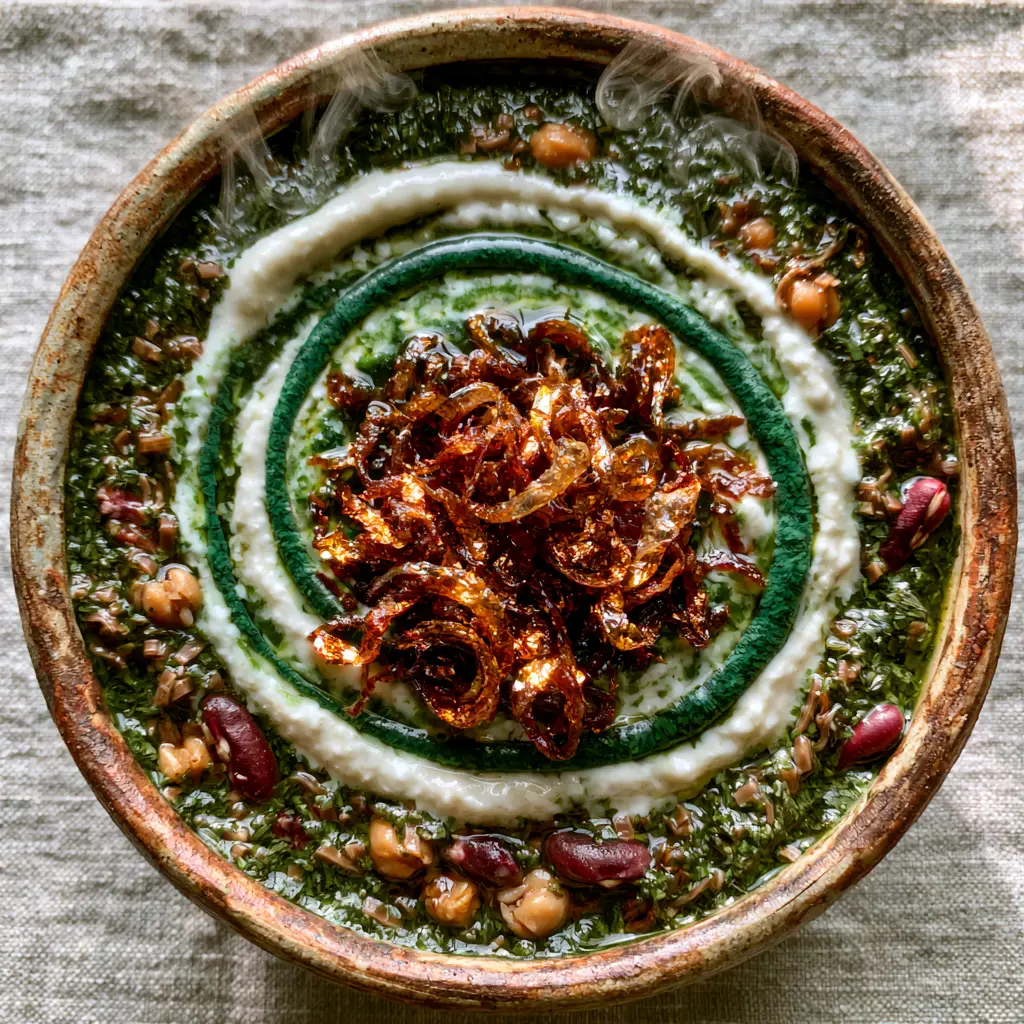
Imagine sitting down to a rustic teal ceramic bowl filled with a deep, emerald-green broth. The aroma of vibrant emerald mint oil and crispy golden fried onions fills the air as wisps of steam rise from the surface. Whether you are serving this for a special occasion or a cozy weeknight dinner, this recipe delivers a restaurant-quality experience right in your own kitchen. It pairs beautifully with other classics like Persian Chicken Kabob for a full feast.
Why This Persian Soup Recipe Is a Showstopper
- Unmatched Texture: The combination of flat wheat noodles, tender chickpeas, and red kidney beans creates a satisfying, “sticks-to-your-ribs” consistency.
- Visual Brilliance: The contrast between the dark green broth, the bright white kashk (whey), and the shimmering gold onions is a Pinterest-lover’s dream.
- Complex Flavor Profile: A perfect balance of earthy herbs, tangy kashk, and the pungent, aromatic punch of fried dried mint.
- Nutrient Dense: Packed with plant-based protein and iron-rich greens like spinach, parsley, and cilantro.
Authentic Ash Reshteh relies on the “Sabzi” (herbs) to provide the base. Unlike Western soups where herbs are a garnish, here they are a primary ingredient. This creates the signature thick green herb broth that defines a true Persian Soup Recipe.
Essential Ingredients for the Ultimate Ash Reshteh
To achieve the forensic visual accuracy of this dish, you will need high-quality staples. Each ingredient serves a specific purpose in building the layers of flavor that make this soup world-famous.
The Legumes and Hearty Base
Chickpeas & Red Kidney Beans: You will need 1/2 cup (100g) of each. These provide the essential bite and protein. For a lighter side dish, you might recognize these legumes in a white bean salad, but here they simmer until buttery soft.
Noodles (Reshteh): Use 8 oz (225g) of flat Persian wheat noodles. These are saltier and starchier than Italian linguine, which helps thicken the broth naturally.
The Vibrant Green Herb Medley
Fresh Spinach: 2 cups (60g) chopped. This provides the bulk of the green color and a soft, silky texture.
Fresh Parsley and Cilantro: 1 cup (30g) of each, finely minced. These add the bright, citrusy, and earthy notes essential for the broth.
Fresh Dill: 1/2 cup (15g). Dill adds a unique aromatic sweetness that cuts through the richness of the legumes.
The Iconic Toppings
Kashk (Liquid Whey): 1/2 cup (120ml). This fermented dairy product provides the creamy white kashk swirl and a distinct tang that cannot be replicated by sour cream.
Dried Mint: 2 tbsp (6g). When bloomed in oil, this creates the vibrant emerald mint oil drizzle seen in the visual blueprint.
Yellow Onions: 2 large (300g). These are sliced thin and fried until they become crispy golden fried onions.
Step-by-Step Instructions to Perfection
1. Preparing the Legume Foundation
Begin by soaking your chickpeas and red kidney beans overnight. In a large Dutch oven, add the soaked beans with 8 cups (1.9L) of water. Bring to a boil, then reduce to a simmer for about 60 minutes. You want the beans to be tender but not falling apart. If you enjoy hearty textures, you’ll love how these compare to the protein in grilled chicken skewers.
2. Building the Thick Green Herb Broth
Once the beans are tender, add your finely chopped spinach, parsley, cilantro, and dill to the pot. Add 1 tsp (6g) of sea salt and 1/2 tsp (3g) of black pepper. Stir well. The herbs will initially look like too much, but they will wilt down into the water, transforming it into a thick green herb broth. Let this simmer for 20-30 minutes until the greens are dark and integrated.
3. Incorporating the Reshteh Noodles
Break the 8 oz (225g) of flat wheat noodles in half and add them to the simmering broth. Because these noodles are salty, do not add extra salt until the very end. The starch from the noodles will begin to thicken the liquid. Stir occasionally to prevent the noodles from sticking to the bottom of the rustic teal bowl later.
4. Searing the Aromatics (Piaz Dagh)
While the noodles cook, heat 1/4 cup (60ml) of neutral oil in a skillet. Add the thinly sliced onions. Fry over medium-high heat, stirring constantly, until they reach a crispy golden fried onion state. Remove half of the onions for garnish. In the remaining oil with the onions, add 4 cloves of minced garlic and 1 tsp (3g) of turmeric. Sauté for 1 minute until fragrant.
5. Creating the Emerald Mint Oil
In a small separate pan, heat 3 tbsp (45ml) of olive oil over low heat. Add the dried mint. Stir for only 30-60 seconds. The goal is to “bloom” the mint to create a vibrant emerald mint oil without burning it. Burning the mint will make it bitter and dark brown instead of the emerald green required by the visual blueprint.
Expert Tips for Success
- Don’t Overcook the Noodles: The Reshteh should be al dente when you turn off the heat, as they will continue to absorb liquid and soften.
- The Kashk Secret: If your kashk is too thick to swirl, whisk it with 1-2 tbsp of warm water until it reaches a pourable consistency.
- Herb Ratio: Always use fresh herbs. Dried herbs will not produce the same vibrant green broth or depth of flavor.
- Sauté the Turmeric: Always sauté your turmeric in oil with the onions; this “blooms” the spice and removes the raw, metallic taste.
Storage, Reheating, and Freezing
This Persian Soup Recipe actually tastes better the next day as the flavors meld. Store leftovers in an airtight container in the refrigerator for up to 4 days. When reheating, you may need to add a splash of water (about 1/4 cup or 60ml) because the noodles will continue to thicken the soup as it sits.
Freezing: You can freeze this soup for up to 3 months. However, the noodles may become slightly softer upon thawing. For the best result, freeze the herb and bean base, then add fresh noodles when you are ready to serve.
What to Serve With This Dish
This soup is incredibly filling, but it pairs wonderfully with a fresh salad. Consider a cucumber caprese salad for a refreshing crunch that balances the warm, earthy tones of the Ash Reshteh. If you are hosting a larger gathering, a side of warm lavash or barbari bread is essential for dipping into the creamy white kashk swirl.
Frequently Asked Questions
Yes! To make this recipe vegan, simply omit the kashk or replace it with a vegan cashew-based yogurt. Ensure you use plenty of the emerald mint oil and fried onions to maintain the depth of flavor.
Soaking legumes like chickpeas and kidney beans is highly recommended to ensure even cooking and better digestion. If you are in a rush, you can use canned beans, but add them toward the end of the cooking process so they don’t turn to mush.
Kashk is a fermented, dried, and then reconstituted whey product common in Middle Eastern cooking. It has a salty, tangy, and unique flavor. If you cannot find it, a mixture of Greek yogurt and sour cream with a teaspoon of lemon juice is a suitable substitute.
Reshteh noodles are available at most Middle Eastern or Persian grocery stores. They are distinct because they are pre-toasted and saltier than Italian pasta. If unavailable, you can use linguine or fettuccine, but you should increase the salt in the broth slightly.
A brown broth usually happens if the herbs are over-simmered or if the turmeric and fried onion base (Piaz Dagh) is burnt. To keep it vibrant, add the fresh herbs in the last 30-40 minutes of cooking and bloom the mint oil only briefly.
The Final Recipe: Authentic Ash Reshteh
Persian Soup Recipe: Authentic Ash Reshteh with Mint Oil
Ingredients
Equipment
Method
- In a large pot, simmer soaked chickpeas and kidney beans in 8 cups of water for 60 minutes until tender.
- Stir in the chopped spinach, parsley, cilantro, and dill. Simmer for 20-30 minutes until the broth turns a deep green.
- Add the Reshteh noodles and cook for 10-15 minutes until the broth thickens and noodles are al dente.
- Fry onions until golden, then bloom dried mint in warm oil for the emerald drizzle. Swirl kashk over the top before serving.
Notes
Ensure the mint oil does not burn or it will turn bitter.
Share Your Masterpiece!
Did you manage to get that perfect creamy white kashk swirl? We want to see your Persian Soup Recipe creations! Please save this recipe to your Pinterest board so you never lose it. Follow katie_bites for more authentic global recipes. If you loved the vibrant emerald mint oil and the crispy golden fried onions, please leave a 5-star rating and a comment below with a photo of your steaming bowl!