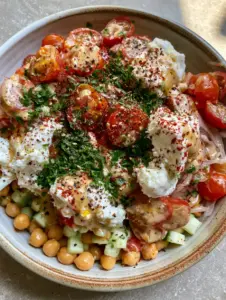
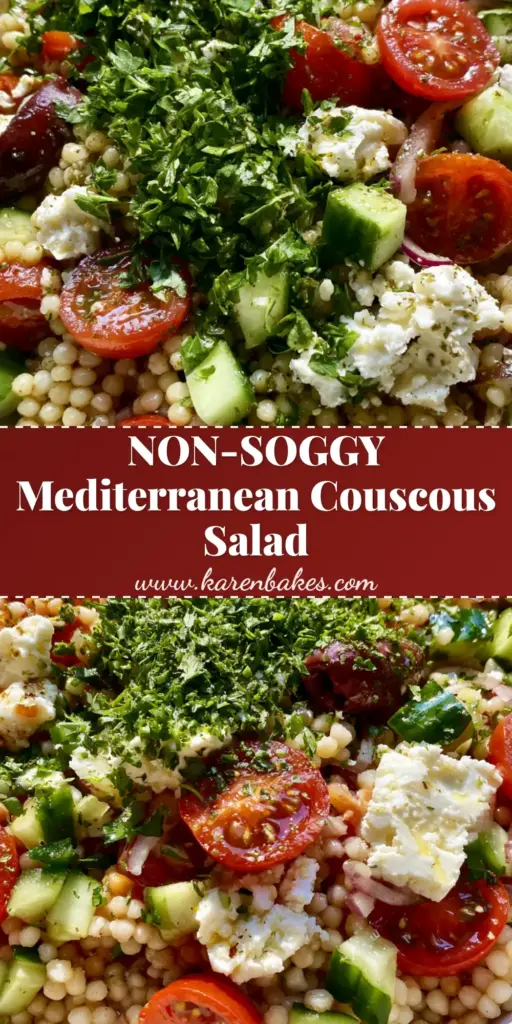
The mediterranean couscous salad is more than just a side dish; it is a vibrant celebration of textures and bright, sun-drenched flavors. When you look into a shallow, matte white ceramic bowl filled with this salad, you should see a masterpiece of culinary geometry. Plump, individual grains of chewy pearl couscous glisten under a translucent lemon-herb vinaigrette, surrounded by the sharp contrast of precisely diced English cucumbers and vibrant halved cherry tomatoes.
Every bite of this mediterranean couscous salad offers a sensory journey, from the creamy tang of large feta chunks to the glossy, briny snap of kalamata olives. This recipe is designed for those who appreciate the “macro” details—the visible seeds in a perfectly ripe tomato and the heavy dusting of finely chopped flat-leaf parsley that adds a forest-green freshness to the plate. Whether you are hosting a bright garden luncheon or prepping a sophisticated week-day meal, this dish delivers a professional-grade aesthetic with zero liquid pooling at the bottom of the bowl.
Achieving this level of visual and structural integrity requires a forensic approach to ingredient preparation. By focusing on the “chewy” nature of the Israeli couscous and the “dew-like” freshness of the vegetables, we create a dish that looks as voluminous and textured as it tastes. If you enjoy this flavor profile, you might also want to explore our traditional Greek-style variations for your next gathering.
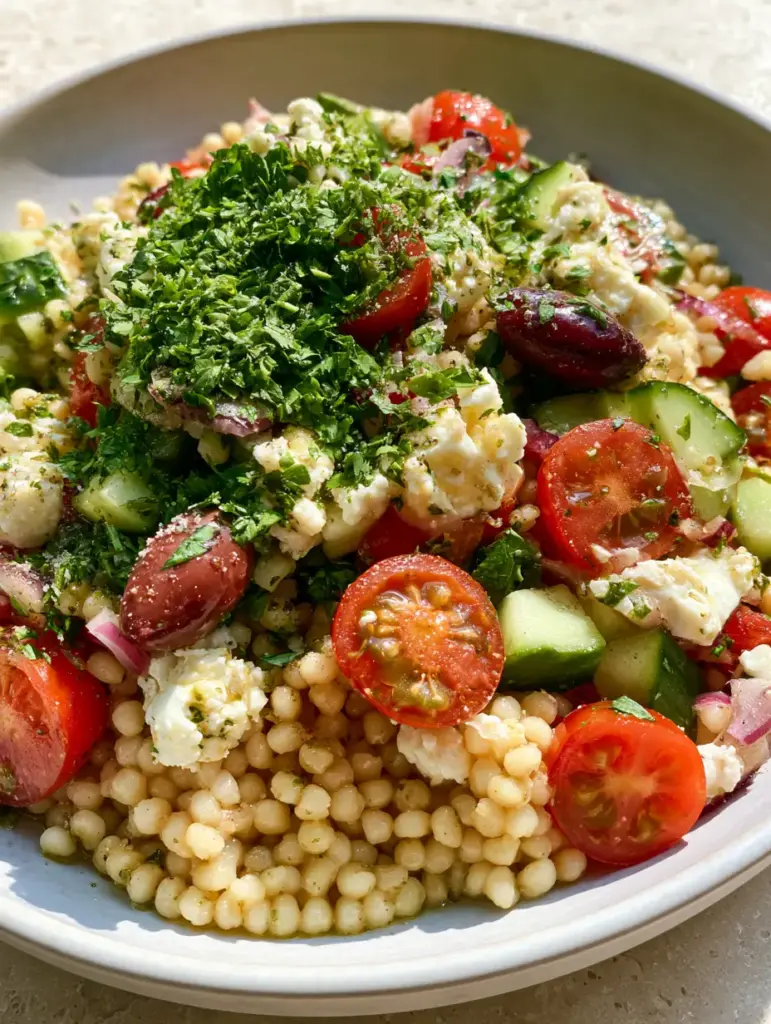
Why This Vibrant Mediterranean Feast Works
- Structural Integrity: Unlike traditional pasta salads that can become soggy, this mediterranean couscous salad uses pearl grains that maintain a distinct, bouncy “pop” in every mouthful.
- Vibrant Color Palette: The contrast between the creamy white feta, the deep purple kalamata olives, and the bright green parsley creates a visually stunning dish that demands a “handheld smartphone photo” before the first bite.
- Balanced Acidity: The lemon-herb vinaigrette provides a translucent sheen that highlights the ingredients without drowning them, ensuring the salad remains light and airy.
- Macro-Textural Variety: From the crunch of the English cucumber to the softness of the red onion slivers, every ingredient is sized to provide a balanced forkful of Mediterranean excellence.
The Essential Components for a Vibrant Mediterranean Feast
To recreate the exact visual described in our blueprint, we must select ingredients that offer both color and structural stability. This mediterranean couscous salad relies on the quality of its produce and the precision of its dressing.
Pearl (Israeli) Couscous: 1.5 cups (approx. 250g) of dry pearl couscous. These toasted semolina flour pearls provide a chewy, substantial base that absorbs the dressing without becoming mushy.
English Cucumber: 1 large (approx. 300g) cucumber, precisely diced. We choose English cucumbers for their thin skin and minimal seeds, ensuring the “dew-like freshness” without excess water release.
Cherry Tomatoes: 1 pint (approx. 280g) of vibrant red cherry tomatoes. Halving these reveals the seeds and adds a juicy, acidic pop that contrasts beautifully against the matte bowl.
Feta Cheese: 4 oz (115g) of high-quality sheep’s milk feta. Use crumbled chunks rather than pre-crumbled varieties to achieve those “creamy white chunks” seen in our visual guide.
Kalamata Olives: 1/2 cup (approx. 75g) of pitted olives. Their glossy sheen and deep salty flavor provide a necessary briny depth to the salad’s profile.
Red Onion: 1/4 small (approx. 40g) onion, sliced into paper-thin slivers. These add a sharp bite and a beautiful purple hue without overpowering the more delicate herbs.
Fresh Flat-Leaf Parsley: 1/2 cup (approx. 15g) finely chopped. A “heavy dusting” of parsley is the secret to that bright, herbaceous finish that defines Mediterranean cooking.
Extra Virgin Olive Oil: 1/4 cup (60ml) of high-quality oil. This forms the base of our vinaigrette, providing the “translucent glisten” on each grain of couscous.
Fresh Lemon Juice: 3 tbsp (45ml) from approximately 1.5 lemons. The acidity brightens the vegetables and acts as a natural preservative for the vibrant colors.
Invisible Essentials: 1 tsp (5g) dried oregano, 1/2 tsp (3g) kosher salt, and 1/4 tsp (1g) cracked black pepper. These foundational elements ensure the salad is scientifically seasoned for maximum flavor extraction.
Precision Tools for Culinary Success
Creating a salad that looks voluminous and textured requires more than just a knife. You will need a medium saucepan with a tight-fitting lid to steam the pearl couscous to its “plump, chewy” potential. A large, shallow matte white ceramic bowl is essential for the final presentation, as it allows the ingredients to spread out rather than pile up and pool liquid.
A sharp chef’s knife is non-negotiable for achieving the “precisely diced” cucumber and “thin slivers” of red onion. Finally, a small glass jar or whisk is required to properly emulsify the lemon-herb vinaigrette, ensuring it coats each grain in a thin, translucent layer rather than separating into oily patches.
The Step-by-Step Roadmap to a Perfectly Textured Salad
Mastering the Plump Pearl Couscous
In a medium saucepan, bring 2 cups (480ml) of water or vegetable broth to a rolling boil with a pinch of salt. Add the 1.5 cups (250g) of pearl couscous, reduce the heat to low, and cover tightly. Simmer for 8-10 minutes until the liquid is absorbed and the grains are tender but still possess a distinct “pop.”
Once cooked, remove from heat and let sit, covered, for 5 minutes. This allows the steam to finish the cooking process, resulting in the individual, non-sticky grains described in our visual prompt. Fluff gently with a fork and spread the grains onto a large baking sheet to cool completely. This prevents the “pooling of liquid” later on.
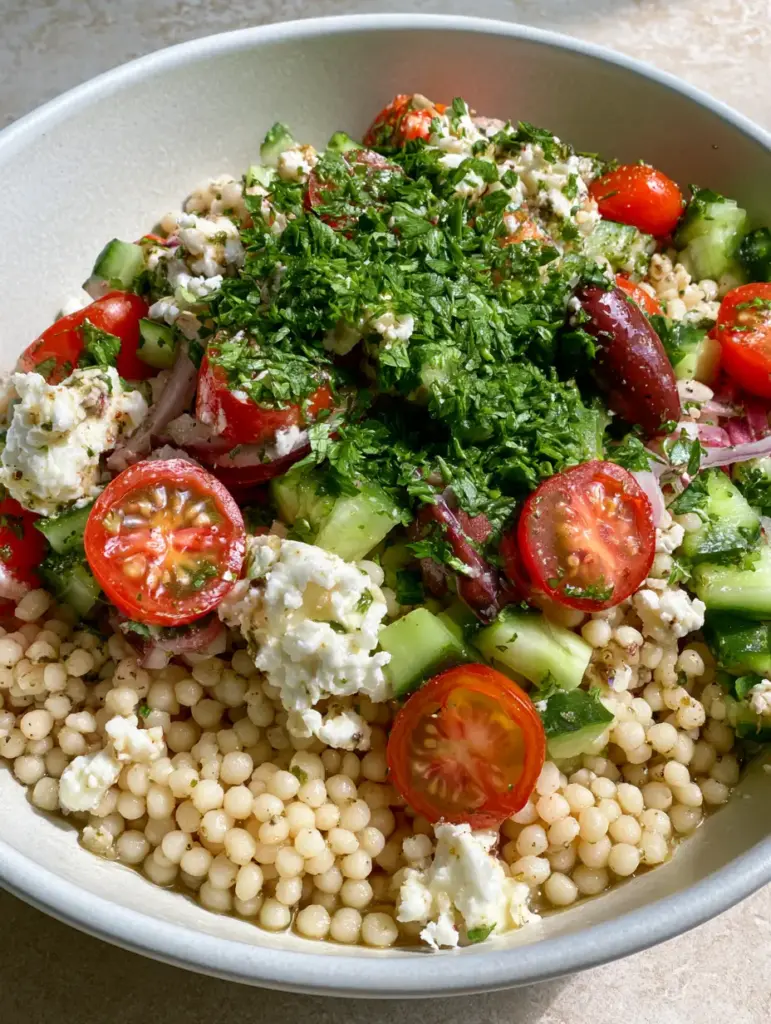
Whisking the Translucent Lemon-Herb Vinaigrette
In a small bowl or jar, combine the 1/4 cup (60ml) of extra virgin olive oil, 3 tbsp (45ml) of fresh lemon juice, 1 tsp (5g) of dried oregano, and your salt and pepper. Whisk vigorously until the mixture is fully emulsified and opaque. The honey (optional, 1 tsp) can help hold the emulsion together. This dressing should look like a golden liquid silk that will glaze the mediterranean couscous salad without making it heavy.
The Art of the Precision Dice
While the couscous cools, focus on your vegetable preparation. Dice the English cucumber into uniform 1/2-inch (1.25cm) cubes. Halve the cherry tomatoes lengthwise to expose the seeds—this visual detail is a hallmark of “dew-like freshness.” Slice the red onion into the thinnest possible slivers, ensuring they are translucent enough to catch the light. Finely chop the parsley until it resembles a green “dust” rather than large leaves.
Assembling for Voluminous Texture
In your shallow, matte white bowl, combine the cooled couscous with the cucumbers, tomatoes, red onions, and kalamata olives. Drizzle the vinaigrette over the top and toss gently with large spoons. You want to see each grain begin to glisten. Finally, fold in the chunks of feta cheese carefully to avoid breaking them down into a paste. Garnish with a heavy dusting of parsley and extra lemon wedges on the side for that handheld photo-ready finish.
Expert Tips for a Professional-Grade Salad
- The Cooling Rule: Never mix warm couscous with fresh vegetables. The residual heat will wilt the cucumbers and make the tomatoes leak juice, leading to the “liquid pooling” we want to avoid.
- Rinsing vs. Toasting: For extra depth, toast the dry couscous in a teaspoon of olive oil for 2 minutes before adding water. This creates a nuttier flavor and a more golden visual.
- The Feta Factor: Buy feta in a block of brine. Pat it dry before crumbling it by hand into large, rustic chunks. This provides a better mouthfeel and a more artisanal look.
- Herb Freshness: Only chop your parsley right before serving. This ensures it remains “bright green” and doesn’t turn dark or damp on the salad surface.
Storage, Reheating, and Meal Prep Advice
This mediterranean couscous salad is an elite candidate for meal prep because pearl couscous holds its shape remarkably well. Store in an airtight container in the refrigerator for up to 4 days. Because this is a “non-lettuce” salad, it won’t wilt, making it perfect for office lunches or picnics.
If the salad seems to have absorbed too much dressing after a day in the fridge, simply add a squeeze of fresh lemon and a tiny drizzle of olive oil to restore that translucent sheen. We do not recommend freezing this salad, as the cellular structure of the cucumbers and tomatoes will collapse upon thawing, destroying the “vibrant and textured” visual we’ve worked so hard to create.
Elevating Your Mediterranean Table
This salad is a versatile powerhouse. While it stands alone as a light lunch, it pairs beautifully with grilled proteins or other Mediterranean staples. For a complete feast, consider serving this alongside our Moroccan-spiced chickpea salad for a study in different couscous textures.
If you’re looking for other starch-based refresheners, our Mediterranean orzo salad or our summer orzo pasta salad offer similar flavor profiles with different pasta shapes. For those planning a summer gathering, don’t forget the drinks; this salad pairs exquisitely with refreshing summer cocktails or a crisp white wine. If you need a crunchy snack on the side, try our famous savory dill pickle saltines. For more inspiration, check out our collection of best non-lettuce salad recipes.
Frequently Asked Questions
Yes, this salad actually tastes better after the flavors meld for a few hours. It stays fresh and vibrant in the refrigerator for up to 4 days.
The secret is cooling the cooked couscous completely on a flat surface before mixing it with vegetables and using English cucumbers which have less water content.
No, pearl couscous is made from semolina flour, which contains wheat. For a gluten-free alternative, you could use quinoa or gluten-free pasta pearls.
If you want a different flavor, try small pearls of fresh mozzarella or even a dairy-free almond-based ‘feta’ for a vegan-friendly version.
Pearl (or Israeli) couscous is much larger and toasted, giving it a chewy, pasta-like texture, whereas regular Moroccan couscous is tiny and fluffy like grain.
The Ultimate Mediterranean Pearl Couscous Salad Recipe
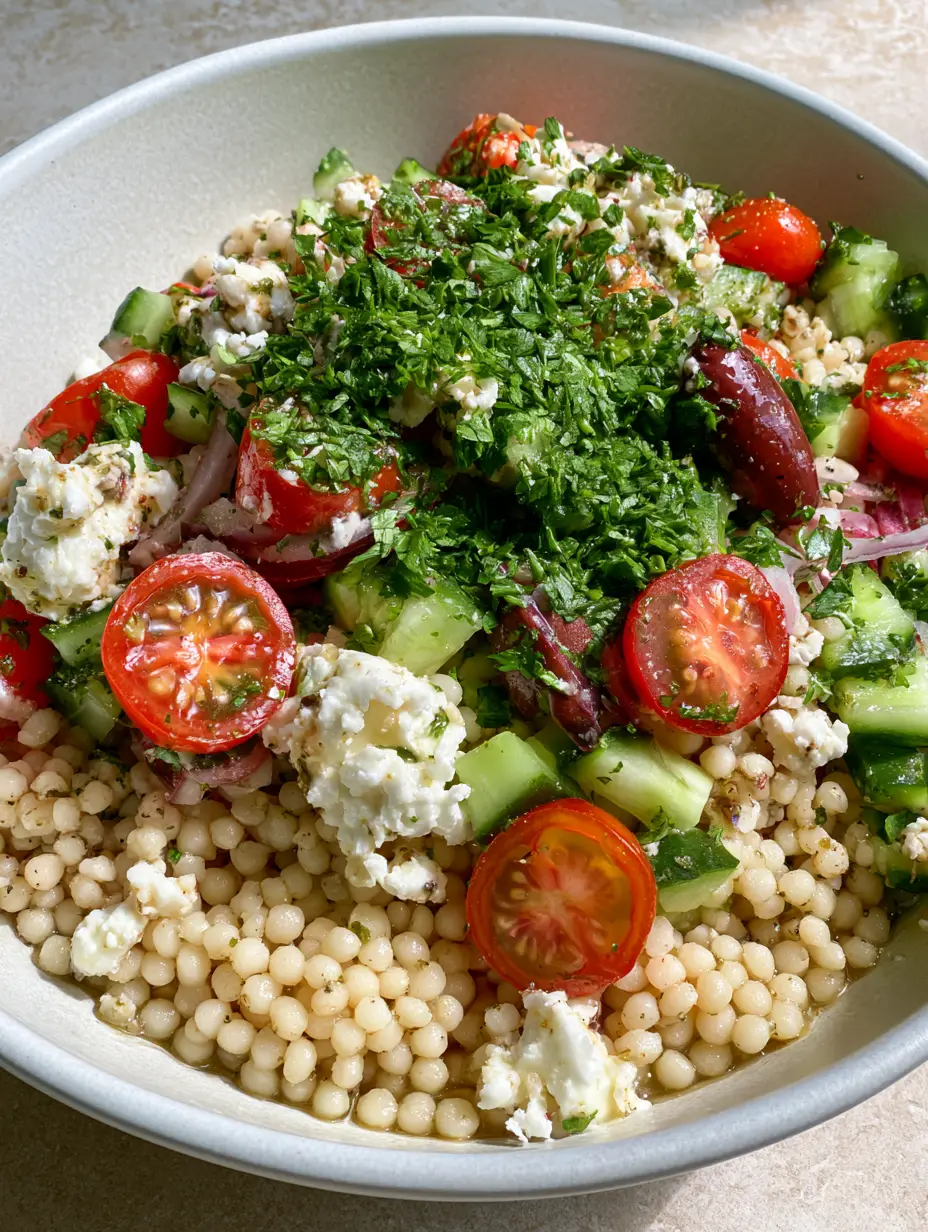
Mediterranean Couscous Salad with Pearl Grains and Lemon Herb Vinaigrette
Ingredients
Equipment
Method
- Bring 2 cups of salted water to a boil. Add pearl couscous, cover, and simmer for 8-10 minutes until liquid is absorbed.
- Fluff with a fork and spread onto a baking sheet to cool completely. This prevents the salad from becoming soggy or pooling liquid.
- In a small jar, emulsify olive oil, lemon juice, and oregano until translucent and glossy.
- Combine cooled couscous with diced cucumber, halved tomatoes, onion slivers, and olives. Pour dressing over, then gently fold in feta and parsley.
Notes
Use English cucumbers to prevent excess moisture release.
Closing Thoughts on This Vibrant Dish
The mediterranean couscous salad is a testament to the fact that simple ingredients, when prepared with precision and care, can result in a world-class culinary experience. By focusing on the “plump, individual grains” and the “dew-like freshness” of the vegetables, you have created a dish that is as much a feast for the eyes as it is for the palate. We invite you to share your results and tag us in your photos!
If you enjoyed this recipe, please leave a comment below and let us know your favorite Mediterranean add-in! Don’t forget to sign up for our newsletter for more elite recipe developments and share this post to Pinterest to save it for your next summer gathering.
“`