There is a specific kind of magic that happens when al dente rotini meets the deep, complex acidity of a dark balsamic glaze. This Tuscan pasta salad isn’t just a side dish; it is a vibrant, textured celebration of Mediterranean pantry staples that looks as stunning as it tastes. Imagine a rustic cream-colored bowl overflowing with glossy spirals, jewel-toned tomatoes, and bright ribbons of basil—it’s the ultimate summer showstopper.
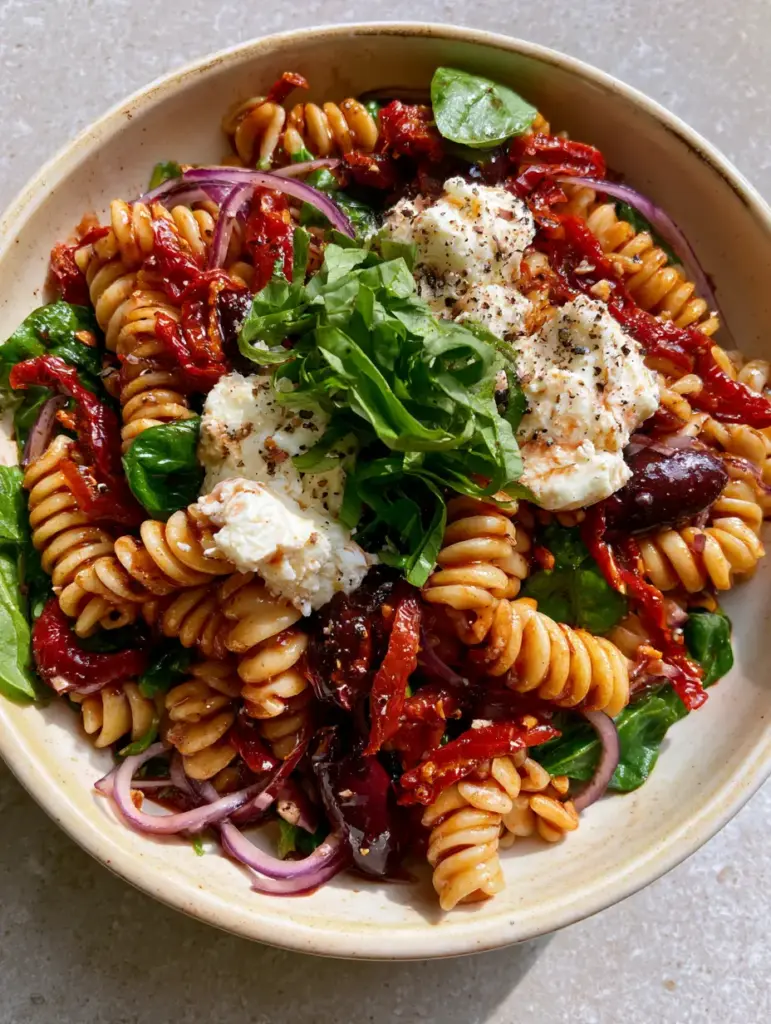
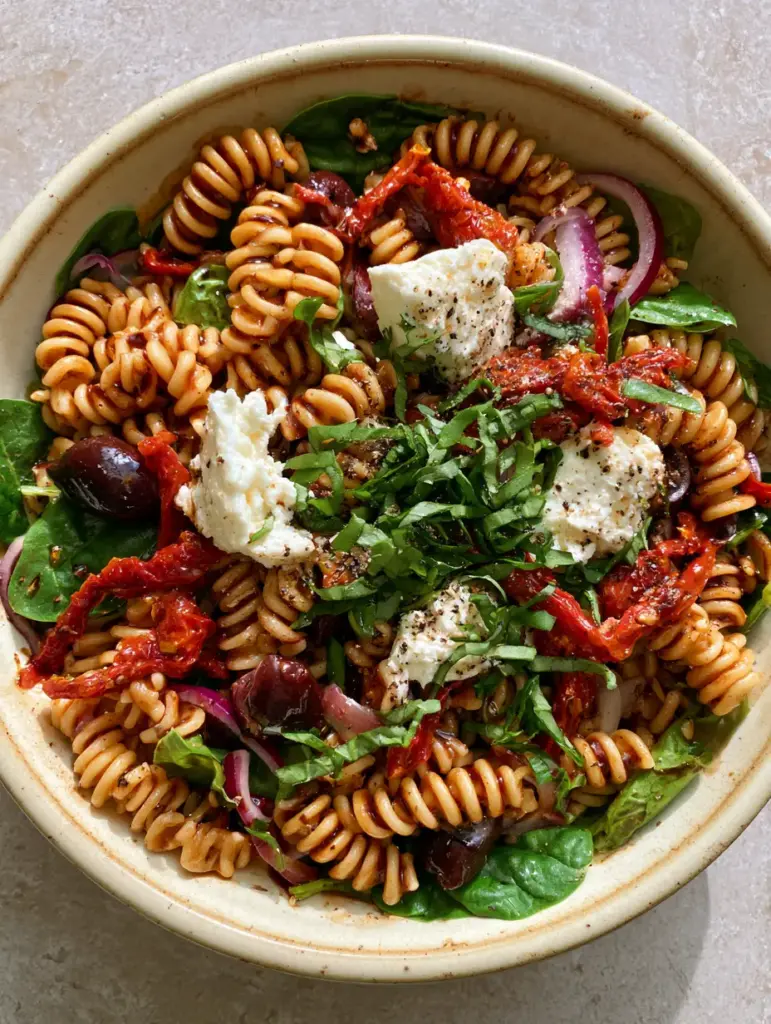
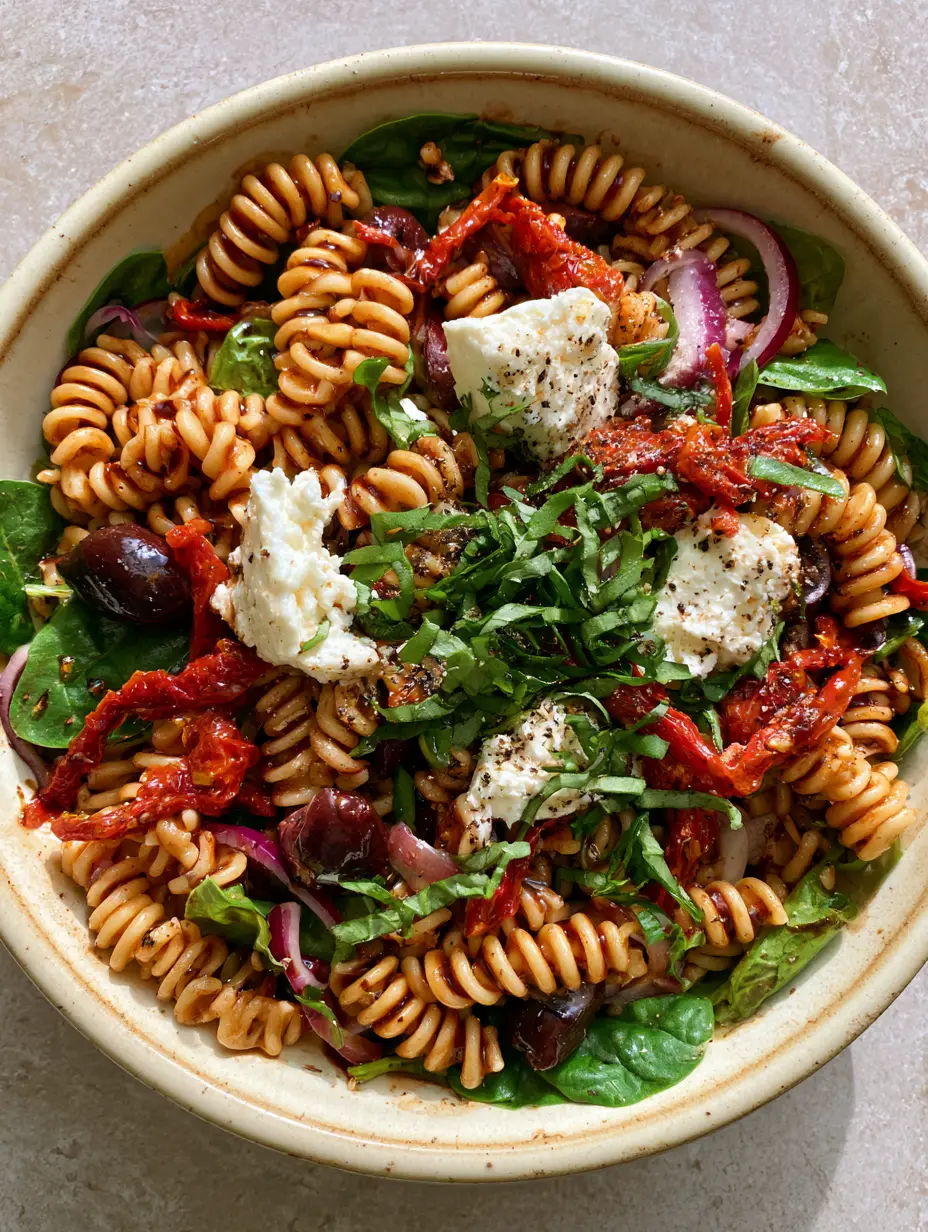
When you capture that first overhead photo of this dish, the natural afternoon sunlight catches the highlights of the oil-glistening sun-dried tomatoes and the creamy chunks of feta. The visual contrast between the purple red onions and the deep green baby spinach makes this recipe a favorite for both aesthetic-focused hosts and hungry families. Whether you are prepping for a picnic or a quick weekday lunch, this dish delivers on every sensory promise.
Achieving the perfect Tuscan pasta salad requires a balance of textures: the bite of the pasta, the silkiness of the vinaigrette, and the salty punch of kalamata olives. In this guide, we will dive deep into the culinary science of emulsification and pasta hydration to ensure your salad stays glossy and flavorful for hours. Let’s build a bowl that is as structurally sound as it is beautiful.
Why This Vibrant Mediterranean Pasta Bowl Works
- Textural Harmony: We use rotini pasta specifically for its spiral shape, which acts as a “sauce trap” for the dark balsamic vinaigrette.
- Glossy Visuals: By using oil-packed sun-dried tomatoes, we introduce a rich, glistening sheen that coats the other vegetables and prevents the spinach from looking dull.
- Salty-Acidic Balance: The creamy feta cheese provides a necessary fatty counterpoint to the sharp, briny kalamata olives and the acidic balsamic base.
- Color Contrast: The combination of thinly sliced purple red onions and vibrant green basil ribbons ensures every forkful is a visual masterpiece.
The Mediterranean Pantry: Key Ingredients and Their Purpose
To recreate the exact look of our visual blueprint, you need high-quality ingredients that stand up to being tossed. Each component has been selected for its ability to maintain its integrity under the weight of the dressing.
1 lb (450g) Rotini Pasta: The corkscrew shape is essential for catching the glossy vinaigrette in every nook and cranny. Always cook this to a strict al dente to ensure it doesn’t become mushy when it absorbs the dressing.
1/2 cup (120ml) Dark Balsamic Vinaigrette: This provides the “dark, glossy” finish described in our visual prompt. A high-quality balsamic vinegar mixed with extra virgin olive oil creates a deep mahogany coat over the pasta.
1 cup (160g) Oil-Packed Sun-Dried Tomatoes: Do not use the dry-packed version for this recipe. The oil-packed strips provide the essential “glistening” effect and a concentrated tomato sweetness that defines the Tuscan profile.
2 cups (60g) Fresh Baby Spinach: These leaves provide a soft, leafy texture and a pop of bright green. We add them while the pasta is still slightly warm so they just barely begin to soften without losing their vibrant color.
1/2 medium (75g) Red Onion: These must be julienned into paper-thin strips. The purple hue adds a necessary color break against the green spinach and white feta.
1/2 cup (75g) Sliced Kalamata Olives: These dark, almond-shaped olives provide the deep, salty bass notes of the dish. Their dark color contributes to the rich, moody aesthetic of the salad.
6 oz (170g) Feta Cheese: Instead of pre-crumbled feta, buy a block and break it into large, rustic chunks. This creates those “creamy white highlights” seen in the handheld smartphone photo.
1/4 cup (10g) Fresh Basil Ribbons: Chiffonade-cut basil provides the final aromatic touch. The bright green ribbons are the “garnish” that signals freshness to anyone looking at the bowl.
1/2 tsp (1g) Cracked Black Pepper: Coarsely cracked pepper provides visual “specs” on the feta and pasta, adding to the rustic, homemade feel of the dish.
Foundational “Invisible” Ingredients
While not explicitly in the visual blueprint, these ingredients are the scientific glue of the Tuscan pasta salad. You will need 2 tbsp (30ml) of Kosher salt for the pasta water to season the rotini from the inside out. Additionally, a teaspoon of Dijon mustard in your vinaigrette will act as an emulsifier, ensuring the oil and balsamic don’t separate on the plate.
Essential Kitchen Tools for Professional Results
To achieve the “overhead handheld photo” quality, you need more than just a bowl. A large stainless steel pot is required for boiling the pasta in plenty of water, which prevents sticking. A sharp chef’s knife is non-negotiable for julienning the red onions into translucent strips and creating clean basil ribbons.
You will also want a large, rustic cream-colored ceramic bowl for serving. The light color of the ceramic provides a neutral backdrop that makes the dark balsamic and bright red tomatoes pop. Finally, a small glass jar is the best tool for shaking your vinaigrette into a perfectly thick, glossy emulsion.
The Step-by-Step Path to Pasta Perfection
1. Precision Pasta Boiling
Bring 4 quarts (3.8L) of heavily salted water to a rolling boil. Add the rotini and cook for exactly 1 minute less than the package directions for “al dente.” We want the pasta to have a firm “bite” because it will continue to soften slightly as it marinates in the balsamic vinaigrette.
2. The Glossy Balsamic Emulsion
In a small jar, combine your balsamic vinegar, extra virgin olive oil, a touch of Dijon, and salt. Shake vigorously until the mixture is thick and opaque. This ensures the dressing clings to the rotini spirals rather than puddling at the bottom of the bowl, creating that “glossy dark” finish we are looking for.
3. Preparing the Vibrant Add-Ins
While the pasta boils, julienne the red onion into thin, purple threads and slice your oil-packed sun-dried tomatoes into strips. This is also the time to chiffonade your basil—stack the leaves, roll them like a cigar, and slice thinly to create those signature green ribbons.
4. The Warm-Toss Technique
Drain the pasta and return it to the pot while still warm. Add the baby spinach and half of the dressing. The residual heat from the rotini will cause the spinach to just barely wilt, making it easier to eat while keeping its “vibrant green” look. Let this mixture cool to room temperature before adding the delicate ingredients.
5. Assembling the Masterpiece
Once cooled, fold in the sun-dried tomato strips, purple onions, and kalamata olives. Add the remaining dressing and toss until everything is glistening. Finally, gently fold in the large chunks of feta cheese, being careful not to break them down into a paste. Finish with the basil ribbons and a generous dusting of cracked black pepper.
Expert Tips for Success
- Don’t Rinse the Pasta: The natural starches on the surface of the rotini help the balsamic vinaigrette adhere to the spirals. Rinsing with cold water will make the sauce slide off.
- Wait to Add Feta: If you add the cheese while the pasta is hot, it will melt and turn the salad gray. Wait until the pasta is completely cool to maintain those bright white chunks.
- Slicing Technique: For the red onion, slice from pole to pole rather than across the equator. This creates cleaner, more attractive julienne strips for a professional look.
- The “Shine” Factor: If the salad looks dry before serving, drizzle 1 tbsp (15ml) of the oil from the sun-dried tomato jar over the top. It adds incredible flavor and an instant photo-ready sheen.
What to Serve with Your Tuscan Pasta Salad
This salad is a powerhouse on its own, but it pairs beautifully with grilled proteins. It is the perfect companion to a light summer orzo pasta salad spread or served alongside a refreshing summer cocktail. If you are hosting a larger Mediterranean-themed dinner, consider pairing it with a Greek couscous salad for a variety of grains and textures.
For those looking for a non-traditional pairing, the acidity of the balsamic also cuts through the richness of a creamy bacon broccoli pasta salad, making for a balanced potluck table. No matter how you serve it, this Tuscan pasta salad is bound to be the first bowl emptied.
Frequently Asked Questions
Yes, you can prepare it up to 24 hours in advance. However, wait to add the fresh basil ribbons until just before serving to prevent them from turning dark.
It is not recommended for this specific visual result. Oil-packed tomatoes provide the essential ‘glisten’ and soft texture required for a true Tuscan style.
Pasta absorbs dressing over time. To keep it glossy, toss with half the dressing while warm and save the other half to add right before serving.
No, do not rinse the pasta. The starch on the rotini helps the balsamic vinaigrette emulsify and stick to the spirals for a better flavor and sheen.
Use the chiffonade technique: stack the basil leaves, roll them tightly like a cigar, and slice across the roll into thin, delicate ribbons.
The Ultimate Tuscan Pasta Salad Recipe
Tuscan Pasta Salad with Sun-Dried Tomatoes and Balsamic Vinaigrette
Ingredients
Equipment
Method
- Cook rotini in salted water until al dente. Drain but do not rinse.
- Toss the warm pasta with baby spinach and half the balsamic vinaigrette until the spinach barely wilts.
- Fold in sun-dried tomatoes, julienned red onion, and sliced kalamata olives.
- Add the remaining dressing, feta chunks, basil ribbons, and cracked black pepper. Toss gently to combine.
Notes
Wait until pasta is cool before adding feta to prevent melting.
Closing & Call to Action
This Tuscan pasta salad is more than just a recipe; it’s a reliable staple that brings the flavors of Italy straight to your kitchen. With its glossy finish and vibrant colors, it’s a dish that tastes just as good as it looks in the photos. If you enjoyed this recipe, please leave a comment below and tell me how it turned out!
Don’t forget to save this recipe to your “Summer Recipes” board by following me on Pinterest. Sharing this post helps me continue to develop professional-grade recipes for home cooks like you. Happy cooking!
Check out our other favorites like this collection of non-lettuce salads for more inspiration!