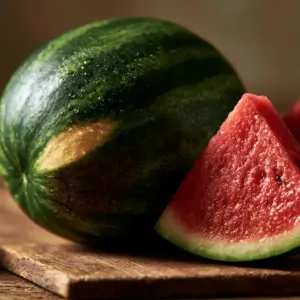
Watermelon Facts are the secret weapon of every summer entertainer, but most people are just guessing when they knock on the rind. You don’t need to be a professional farmer to identify a ruby red watermelon wedge that tastes like pure candy. By looking for specific visual markers like a creamy yellow field spot and brown textured sugar webbing scars, you can ensure your summer fruit tray is always the star of the show. In this guide, we will break down the science of selection so you never bring home a bland melon again.
Why These Watermelon Facts Will Change Your Summer
- Maximum Sweetness: Learn to identify the sugar webbing that indicates a high brix (sugar) content.
- Perfect Texture: Avoid the dreaded mushy center by checking the matte rind texture and stripe definition.
- Hydration Hero: Discover why glistening water droplets on a fresh-cut wedge are a sign of peak freshness.
- Visual Confidence: Never stand in the grocery store aisle feeling confused again; these Watermelon Facts provide a clear checklist.
The Anatomy of a Premium Whole Watermelon
Selecting the right fruit starts with observing the whole dark green striped watermelon before it is even sliced. A premium melon isn’t just about weight; it is about the story the rind tells. A matte rind texture is actually preferred over a shiny one, as a shiny coat often means the fruit is underripe and starchy.
When you find a melon resting in a rustic wooden crate, check for sharp, distinct stripes. These dark green lines should contrast beautifully against the lighter green background. If the colors are bled together, the melon likely lacked the consistent sun exposure needed for peak development.
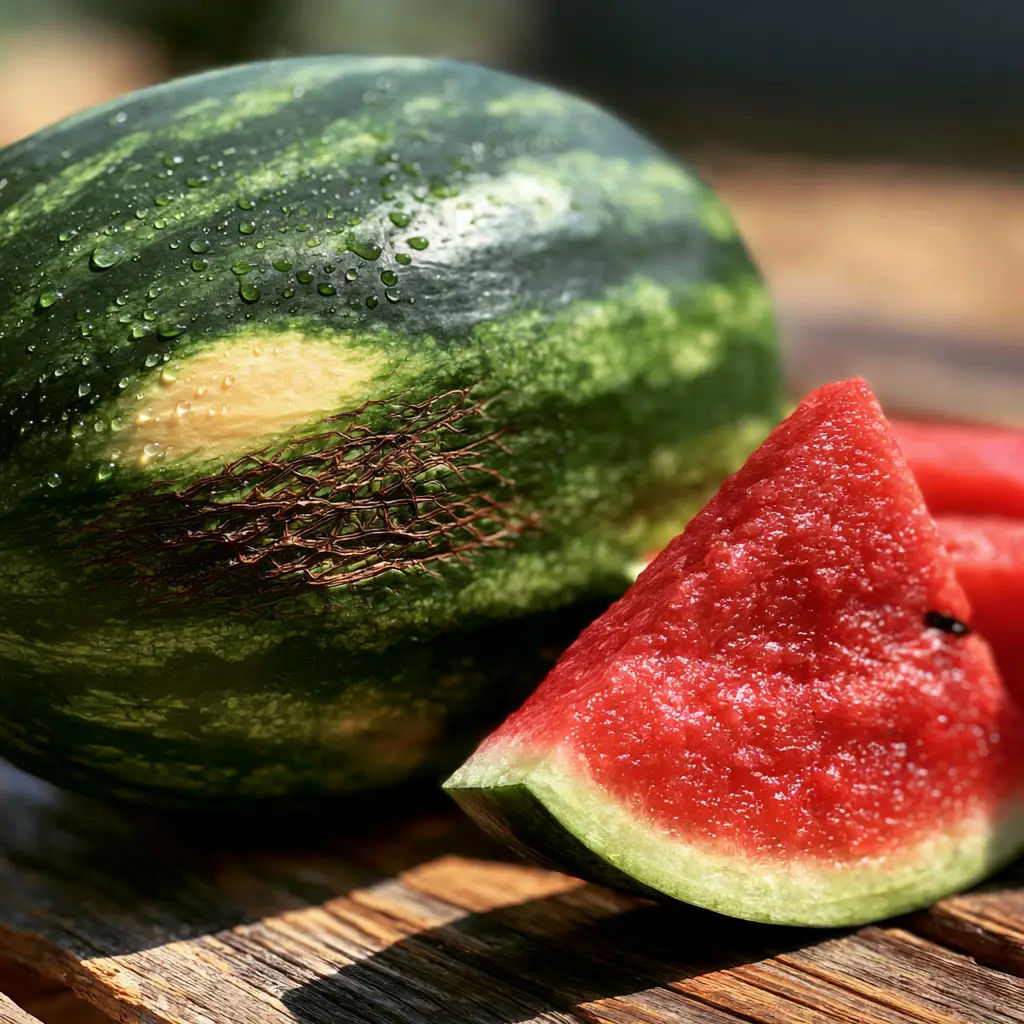
One of the most important Watermelon Facts involves the “belly” of the fruit. A large, prominent, creamy buttery-yellow field spot is non-negotiable. This is where the melon sat on the ground soaking up nutrients. If this spot is white or pale green, put it back—it was picked way too early.
Essential Tools for Preparing Your Perfect Melon
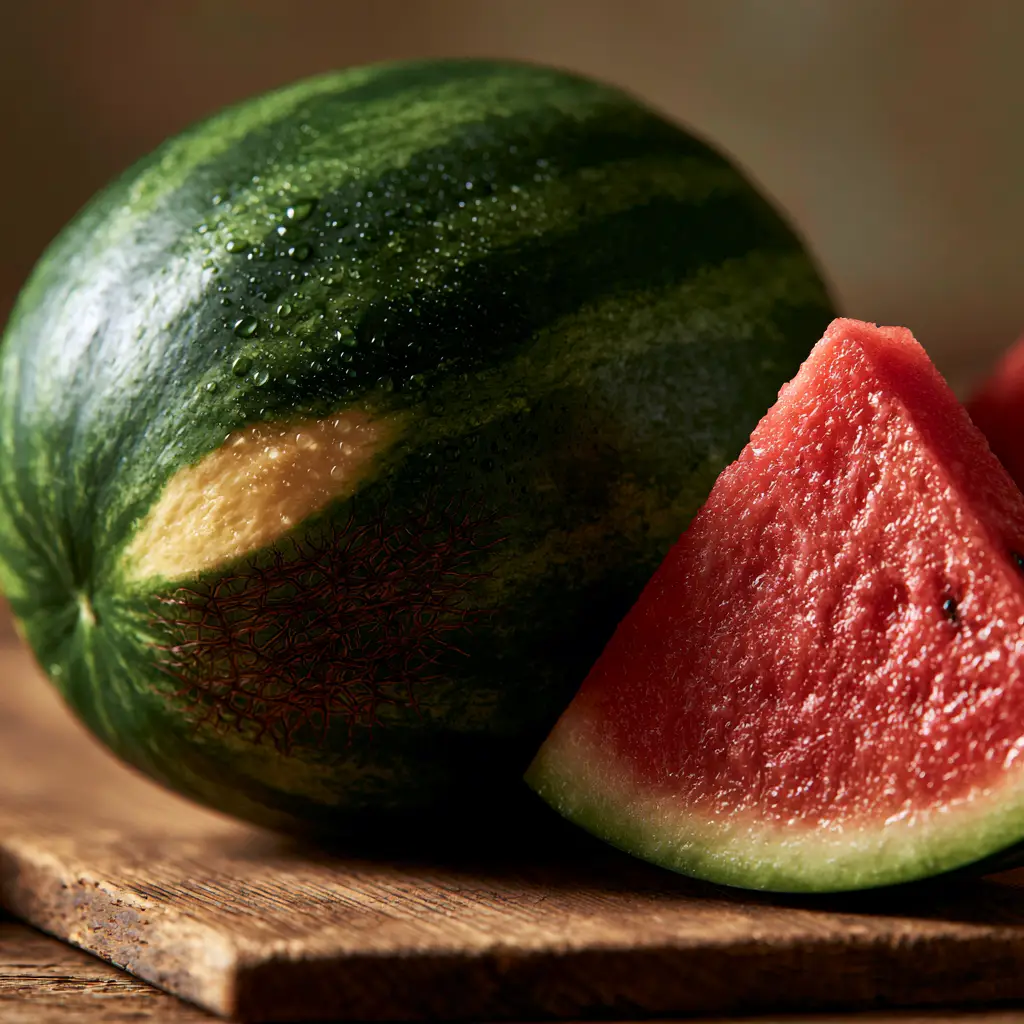
To turn those Watermelon Facts into a refreshing snack, you need the right gear. A sharp 10-inch (25cm) chef’s knife is vital for cutting through the thick matte rind safely. You will also want a large cutting board with a juice groove to catch the glistening water droplets that escape during slicing.
If you are planning to serve this alongside a three bean salad at your next barbecue, consider a melon baller for aesthetic appeal. However, for the best experience, a simple perfectly sliced triangular wedge is the classic choice. It allows you to see the vibrant, ruby-red, dense, grainy flesh and those iconic black seeds that many connoisseurs swear offer a better flavor than seedless varieties.
How to Identify Sugar Webbing Scars
Look for the “Spiderwebs”
Many shoppers avoid melons with dark brown, textured sugar webbing scars because they look like imperfections. However, these are actually one of the most vital Watermelon Facts you can learn. These scars are caused by bees pollinating the flower multiple times. The more pollination, the sweeter the fruit inside.
Touch the Rind
Run your hand over the matte rind texture. You should feel the slight ridge of the sugar webbing. This texture indicates that the natural sugars have begun to seep toward the surface, promising a ruby red watermelon wedge that is incredibly sweet. This is the same principle of quality we use when selecting fruit for our strawberry cream cheese pie—visual cues never lie.
Check the Weight
A heavy melon is a hydrated melon. When you lift that whole dark green striped watermelon, it should feel heavier than it looks. This weight comes from the water content held within the dense, grainy flesh. If it feels light or hollow, the water has begun to evaporate, leading to a mealy texture.
Step-by-Step Selection and Slicing Guide
Step 1: The Visual Inspection
Start by scanning the bin for a melon with a large creamy yellow field spot. Avoid any melons with bruises, soft spots, or leaking juices. Look for the brown textured sugar webbing near the stem end or the field spot. The rind should be a deep matte forest green with no glossy sheen.
Step 2: The Sound Test
Give the melon a firm rap with your knuckles. You are listening for a deep, hollow “thud” rather than a high-pitched “ping.” A hollow sound confirms the vibrant, ruby-red flesh is full of juice and hasn’t started to dry out or crack inside (known as hollow heart).
Step 3: Preparing the Rind
Wash the whole dark green striped watermelon under cold running water. Even though you don’t eat the rind, the knife will pull bacteria from the outside into the dense, grainy flesh as you slice. Pat it dry until the glistening water droplets are gone before placing it on your cutting board.
Step 4: The Master Slice
Cut the melon in half crosswise. Immediately look for the ruby red color and the absence of a thick white pith. A thin pith means more edible fruit! Slice into 1-inch (2.5cm) thick rounds, then cut those rounds into quarters to create the perfectly sliced triangular wedge seen in professional food photography.
Expert Tips for the Best Watermelon Experience
- Salt is Key: A tiny pinch of flaky sea salt (approx. 1/8 tsp or 0.75g) over a ruby red watermelon wedge will actually make the fruit taste sweeter by counteracting any bitterness.
- Temperature Matters: While some like it room temp, chilling your melon for at least 2 hours (120 minutes) enhances the matte rind texture and makes the glistening water droplets even more refreshing.
- Seed Logic: Don’t fear the black seeds. They are a sign of an heirloom-style melon which often has a deeper, more complex sugar profile than modern triploid (seedless) varieties.
- Avoid the Fridge Smell: Watermelon absorbs odors easily. If you have leftover vibrant, ruby-red slices, wrap them tightly in plastic wrap or store in an airtight container.
Storage, Reheating, and Freezing
Watermelon is best enjoyed fresh, but these Watermelon Facts include how to handle leftovers. You should never “reheat” watermelon as it destroys the cell structure. Keep sliced wedges in the refrigerator for up to 3 days. Any longer and the dense, grainy flesh will begin to lose its structural integrity.
For long-term storage, you can freeze watermelon cubes. While they won’t retain the matte rind texture or the crunch of a fresh ruby red watermelon wedge, they are perfect for smoothies or “frose.” Freeze in a single layer on a parchment-lined tray before transferring to a bag to prevent clumping.
What to Serve with Fresh Watermelon
Watermelon is incredibly versatile. It pairs perfectly with salty feta cheese and fresh mint for a classic summer salad. If you want a full spread, serve it alongside a three bean salad for a high-fiber, hydrating lunch that keeps you cool in the sun.
For dessert, a perfectly sliced triangular wedge is the best palate cleanser after a rich strawberry cream cheese pie. The contrast between the creamy pie and the glistening water droplets on the fruit is a sensory delight.
Frequently Asked Questions
Many heirloom enthusiasts believe seeded watermelons have a superior, more traditional flavor and a denser, grainier texture compared to seedless varieties.
Actually, no. One of the surprising Watermelon Facts is that a matte rind indicates ripeness, while a shiny rind usually means the fruit is underripe.
A whole watermelon can last about 7-10 days at room temperature. Once cut, it should be refrigerated and consumed within 3 days for peak freshness.
Focus on the field spot and sugar webbing. A creamy yellow (not white) spot and brown, spiderweb-like scarring are the most reliable indicators of high sugar content.
Those brown scars are called sugar webbing. They occur when bees pollinate the flower frequently. More webbing usually means a much sweeter ruby red interior.
The Ultimate Summer Watermelon Guide
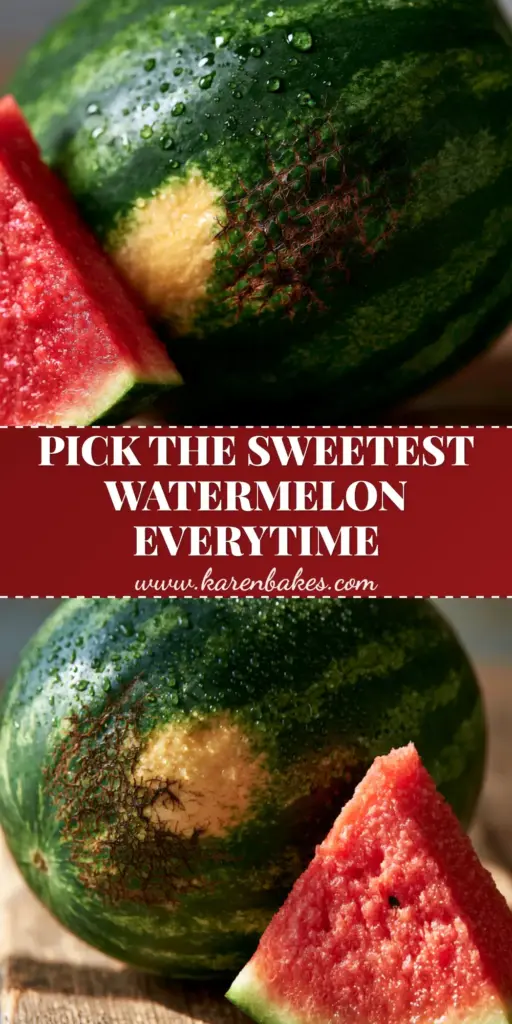
Watermelon Facts: How to Pick the Perfect Sweet Melon Every Time
Ingredients
Equipment
Method
- Find a melon with a large creamy yellow field spot and visible brown textured sugar webbing scars.
- Ensure the melon feels heavy for its size and produces a hollow thud when tapped.
- Rinse the matte rind under cold water (approx. 240ml per second) to remove surface dirt before cutting.
- Cut the melon into 1-inch (2.5cm) thick rounds, then into triangular wedges showing the ruby red flesh and black seeds.
Notes
Always store cut watermelon in the fridge to maintain the dense grainy texture.
Join the Community!
Did these Watermelon Facts help you find the sweetest melon of your life? We want to see your summer spreads! Save this guide to your Pinterest “Summer Recipes” board so you always have the checklist handy. Follow @katie_bites for more culinary secrets and don’t forget to leave a 5-star rating if this helped you avoid a bland melon! Share a photo of your ruby red watermelon wedge in the comments below!