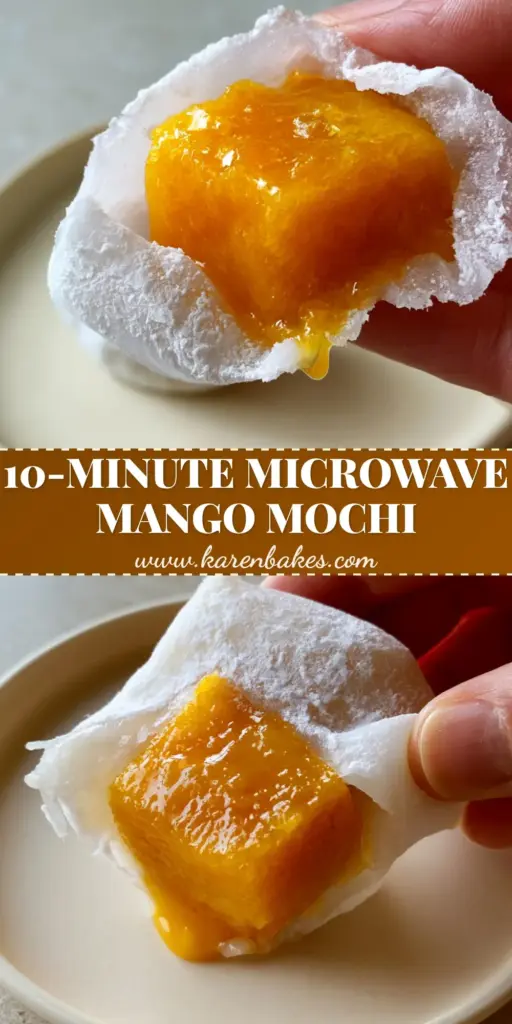
Mango mochi is the crown jewel of refreshing, no-bake treats, combining a silky, translucent outer shell with a burst of sun-ripened tropical fruit. If you have been scrolling through Pinterest looking for that perfect, ethereal bite that looks as good as it tastes, you have found it. This recipe focuses on the delicate balance of a chewy, elastic dough and a glistening, juicy center that practically melts in your mouth.
Unlike heavier desserts, this mango mochi emphasizes the natural sweetness of the fruit. By using the traditional steaming method, we achieve a dough that is far superior in texture to microwave versions—offering that signature “QQ” bounce that mochi lovers crave. Whether you are a seasoned wagashi pro or a first-timer, this guide will ensure your mochi looks like a professional handheld smartphone photo from a high-end boutique.
Why You Will Fall in Love With This Homemade Mango Mochi
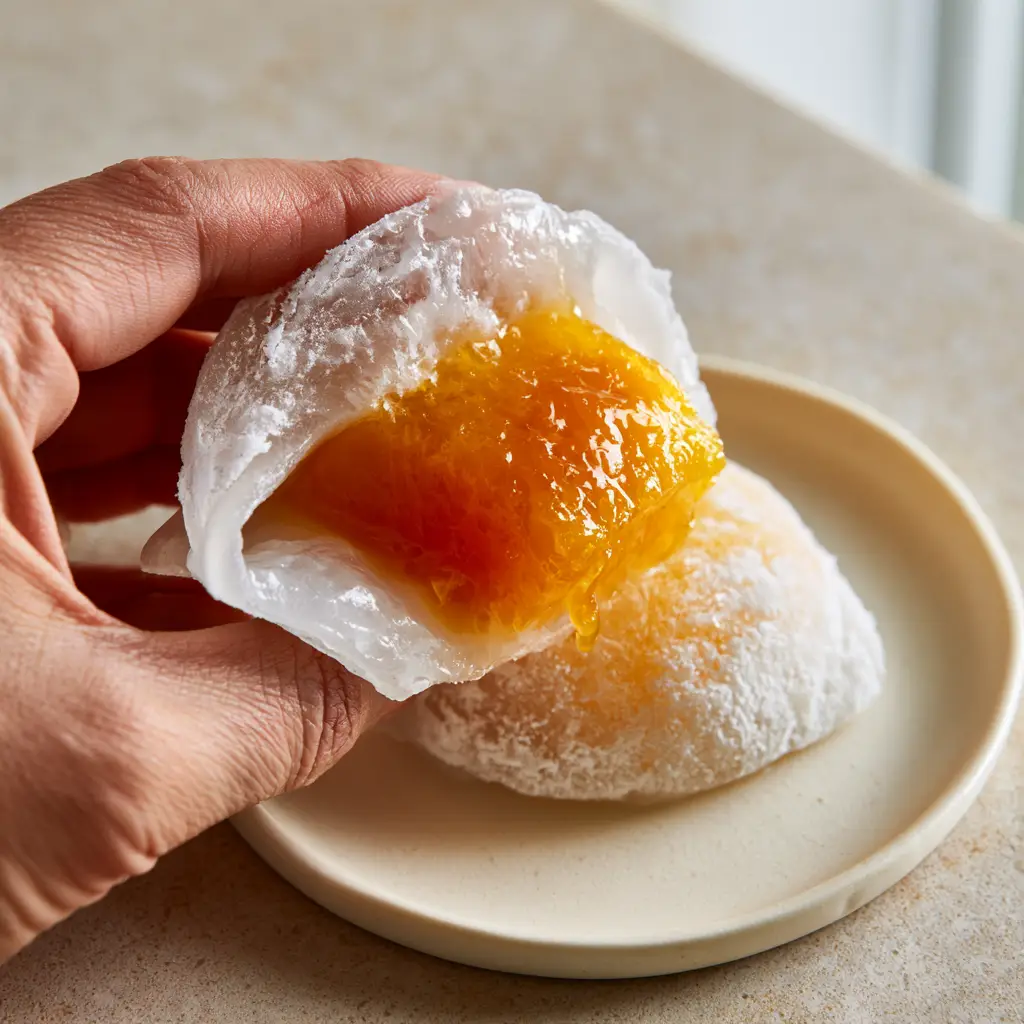
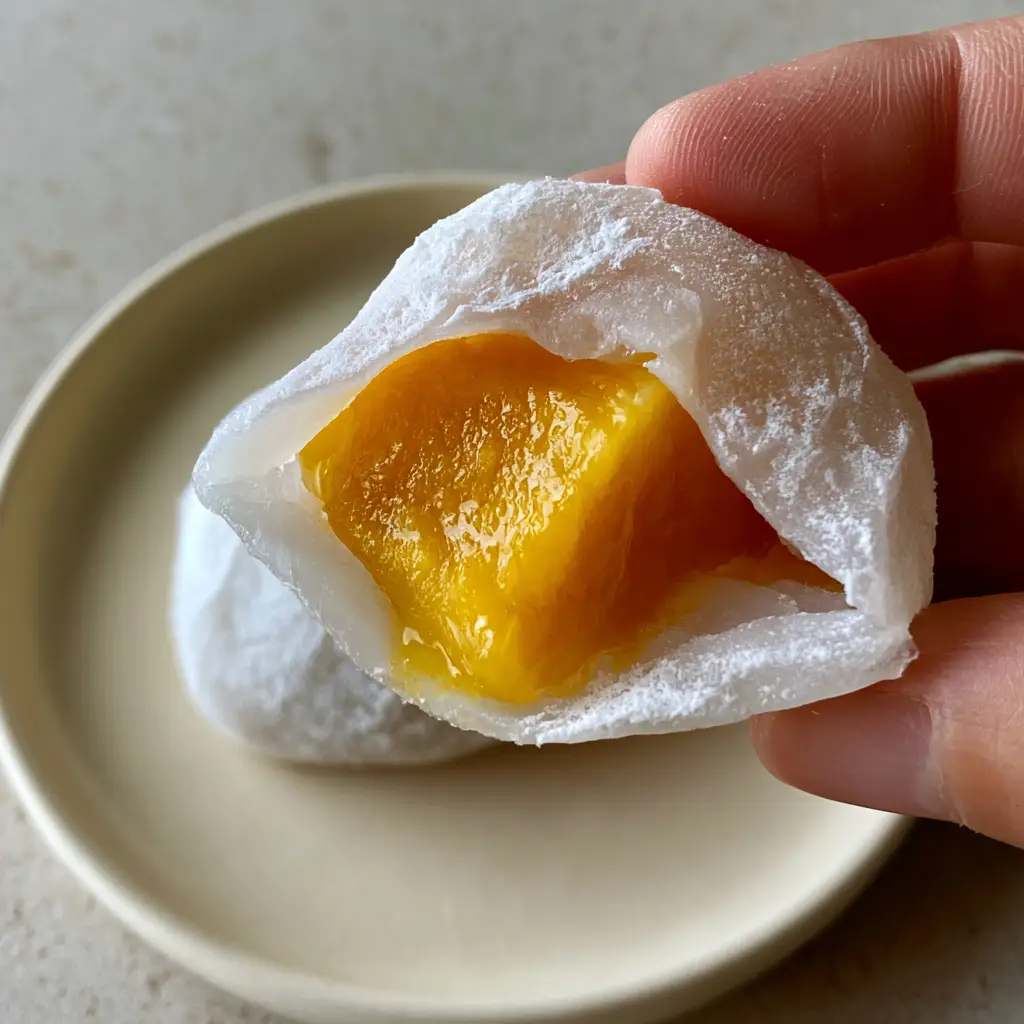
- Translucent Elasticity: The dough is engineered to be thin and see-through, showcasing the vibrant orange of the fruit beneath.
- Fresh Fruit Core: We use large, glistening cubes of Kensington Pride mango, ensuring every bite is dripping with natural juice.
- Perfectly Balanced Sweetness: The matte cornstarch dusting offsets the floral notes of the ripe mango perfectly.
- Textural Contrast: A silky-smooth exterior meets a soft, melting fruit interior for a multi-sensory experience.
If you enjoy the delicate nature of this fruit-filled treat, you will also love our silky peach mochi or perhaps a more decadent Hong Kong style mango pancake for your next weekend brunch.
Essential Ingredients for the Perfect Translucent Dough
To achieve the specific visual blueprint of this mango mochi, ingredient quality is everything. You cannot swap glutinous rice flour for regular rice flour, or the dough will fail to become elastic.
- Glutinous Rice Flour (Mochiko): 1.5 cups (240g). This is the foundation of the dough, providing the sticky, chewy texture.
- Cornstarch (for dough): 1/4 cup (30g). Adds structure and prevents the dough from being overly “floppy.”
- Granulated Sugar: 1/3 cup (65g). Just enough to sweeten the dough without overpowering the mango.
- Full-Fat Coconut Milk or Water: 1 cup (240ml). Coconut milk provides a rich, opaque base that turns beautifully translucent when steamed.
- Kensington Pride Mangoes: 2 large, ripe mangoes. Look for fruit that is deep orange and slightly soft to the touch.
- Extra Cornstarch (for dusting): 1/2 cup (60g). Essential for handling the sticky dough and achieving that matte ceramic-like finish.
Choosing the Best Mango for Your Mochi
The mango mochi experience depends entirely on the fruit. While many varieties work, the Kensington Pride or Alphonso mango is preferred for its lack of fibrous strings and its high juice content.
When you slice into the mango, you should see moisture droplets forming on the flesh immediately. This glistening quality is what makes the final reveal—when you pull the mochi apart—so visually stunning for your Pinterest followers.
If you have leftover mango after making this recipe, consider incorporating it into a refreshing amaretto island punch or even a bright shrimp ceviche for a balanced meal.
How to Master the Steamed Mochi Technique
Traditional steaming is the secret to the mango mochi visual blueprint. It allows the starches to gelatinize slowly, resulting in a dough that is much more elastic and durable than microwave methods.
Step 1: Preparing the Liquid Base
In a large glass bowl, whisk together the glutinous rice flour, 1/4 cup (30g) of cornstarch, and sugar. Slowly pour in the 1 cup (240ml) of coconut milk or water. Whisk vigorously until the batter is completely smooth and resembles heavy cream. There should be no lumps remaining, as these will create grainy spots in your finished mango mochi.
Step 2: The Steaming Process
Prepare a steamer basket over boiling water. Cover the bowl with heat-safe plastic wrap or a lid to prevent condensation from dripping into the batter. Steam on medium heat for 20-25 minutes. Visual Cue: The dough is ready when it transitions from a milky white liquid to a solid, translucent, and slightly yellowish-white mass that looks matte yet bouncy.
Step 3: The Cooling and Kneading Phase
Once steamed, let the dough cool for 5-10 minutes until it is safe to handle but still warm. Warm dough is significantly more elastic. Dust your clean stone countertop generously with cornstarch. Scrape the dough onto the surface. Sensory Cue: The dough should feel incredibly soft, almost like a silky marshmallow, and should stretch easily without snapping.
Step 4: Shaping the Fruit Core
While the dough cools, peel your mangoes and cut them into large, uniform cubes (about 1.5 inches or 4cm). Ensure the cubes are glistening and fresh. Pat them very lightly with a paper towel if they are excessively wet, but keep those moisture droplets visible for the best mouthfeel.
Step 5: The Final Assembly
Divide the dough into 8-10 equal pieces. Flatten a piece of dough into a disc. Place one mango cube in the center. Gently pull the edges of the translucent dough over the fruit, pinching the bottom to seal. Roll the ball lightly in your palms to create a smooth sphere. Visual Cue: You should see the vibrant orange of the mango glowing through the thin white dough.
Expert Tips for Success
- Avoid Over-Steaming: If the dough is steamed too long, it can become tough. Check it at the 20-minute mark; it should be firm but jiggly.
- Use a Silicone Spatula: Mochi dough is notoriously sticky. A silicone spatula lightly greased with a neutral oil will be your best friend.
- Handheld Photo Tip: For that viral Pinterest shot, pull the mango mochi apart slowly with one hand to show the juices dripping from the fruit core.
- Temperature Matters: Serve these slightly chilled for the best flavor, but never straight from the fridge as the dough can harden.
For those looking to expand their skills beyond sweets, learning how to make pancakes from scratch is a great way to master batter consistency, which translates well to mochi making.
Storage, Reheating & Freezing
Mango mochi is best enjoyed the day it is made. Because we are using fresh, high-moisture fruit, the dough will eventually absorb the juice and become soggy.
Storage: Keep in an airtight container at room temperature for up to 24 hours. If you must refrigerate, wrap each mochi individually in plastic wrap, but note that the texture will become firmer.
Freezing: We do not recommend freezing fresh fruit mochi, as the mango’s cell structure breaks down upon thawing, resulting in a watery mess inside the dough.
What to Serve With This
This mango mochi is a fantastic palate cleanser. It pairs beautifully with light, savory dishes. Try serving it after a meal of chicken tsukune or a crisp asian pasta salad. The sweetness of the mango complements the umami notes of Japanese or Southeast Asian cuisine perfectly.
Frequently Asked Questions
Yes, you can microwave the dough in 30-second bursts, stirring in between, until translucent. However, the steaming method provides a more elastic and durable texture that is easier to wrap around large fruit pieces.
It is best eaten within 24 hours. The high moisture content of the fresh mango will eventually cause the dough to become soft and lose its chewiness.
Yes! Despite its name, glutinous rice flour is gluten-free. It is made from ‘sticky’ rice which contains amylopectin, giving it that signature chew without any wheat gluten.
Kensington Pride, Honey (Ataulfo), or Alphonso mangoes are best because they are sweet, vibrant in color, and have a smooth, non-fibrous texture that melts with the dough.
Mochi dough is naturally sticky! Ensure you use plenty of cornstarch on your hands and work surface. Also, let the dough cool slightly; very hot dough is much stickier than warm, set dough.
The Ultimate Mango Mochi Recipe Card
Mango Mochi: The Ultimate Soft and Translucent Fresh Fruit Dessert
Ingredients
Equipment
Method
- Whisk glutinous rice flour, 1/4 cup cornstarch, sugar, and coconut milk in a bowl until perfectly smooth.
- Cover the bowl and steam for 20-25 minutes until the dough is translucent and elastic.
- Transfer the warm dough to a cornstarch-dusted surface and knead until silky and smooth.
- Divide dough into 10 pieces, flatten into discs, and wrap each around a large cube of fresh mango. Pinch to seal.
Notes
Pat the mango cubes slightly if they are too juicy to help the dough seal.
Join the Katie Bites Community!
Did your mango mochi turn out perfectly translucent? We want to see your results! Save this recipe to your “Dessert Goals” board on Pinterest and follow katie_bites for more tropical inspirations. If you made this, please drop a photo in the comments below and leave a 5-star rating—it helps other home cooks find these delicious treats!